Gerechtigkeitsgasse, alley in the old town of Bern, Switzerland
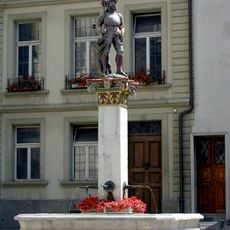
The Gerechtigkeitsgasse is the eastern half of Bern's central east-west axis in the Zähringerstadt, the oldest quarter, founded in 1191. It runs 260 meters from the Kreuzgasse to the Nydegg, where it forks into the Nydeggstalden and the Nydeggasse. Stone arcades called Lauben line both sides, and the street rises gently toward the east. The Justitia figure by Hans Gieng stands on the Gerechtigkeitsbrunnen.
The Gerechtigkeitsgasse was the main street and central marketplace of the Zähringerstadt founded in 1191; with the Kramgasse it was called Märitgasse until the 16th century, when the markets moved west toward the Zytglogge. It was named after the fountain built in 1543 and officially renamed Gerechtigkeitsgasse in 1798. Between 1450 and 1550 the guilds and tanneries left and the street became a residential area for patrician families.
The street takes its name from the Justice Fountain at its center, which depicts the goddess of justice and dates to the mid-sixteenth century. Locals and visitors use the covered walkways today as natural gathering spaces, strolling between shops, restaurants, and outdoor seating areas where they watch daily life pass by.
The alley is easily walkable and several bus stops are nearby for convenient access to other parts of the city. Plan to stroll slowly through the covered walkways to explore the shops and cafes, and allow time to rest at one of the outdoor seating areas along the way.
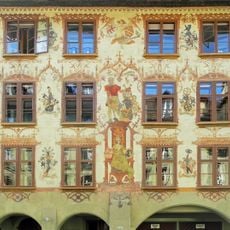
House no. 40, the Marcuard-Haus, was where the Helvetic government surrendered to French troops on 18 September 1802. Built in 1743 by Albrecht Stürler for Alexander von Wattenwyl, it replaced three narrow houses and is Bern's most expansive urban palais, a French hôtel inserted into the medieval streetscape.
The community of curious travelers
AroundUs brings together thousands of curated places, local tips, and hidden gems, enriched daily by 92,820 contributors worldwide.