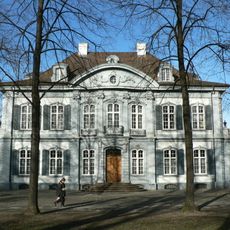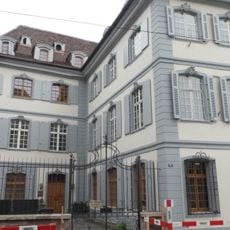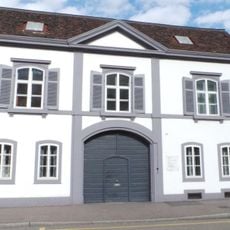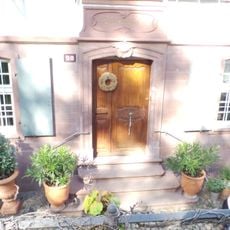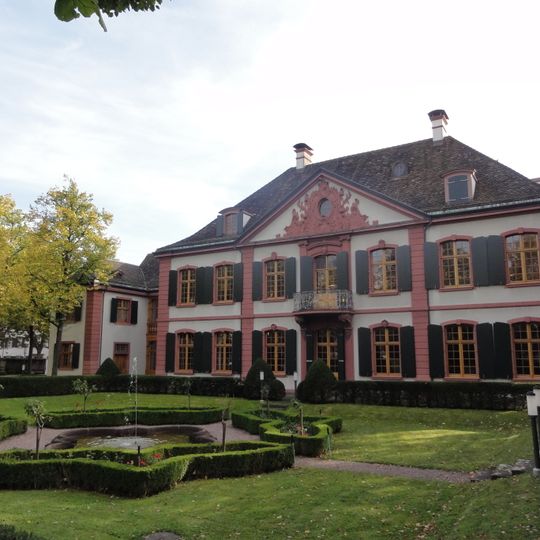
Holsteinerhof, Baroque palace in Basel, Switzerland
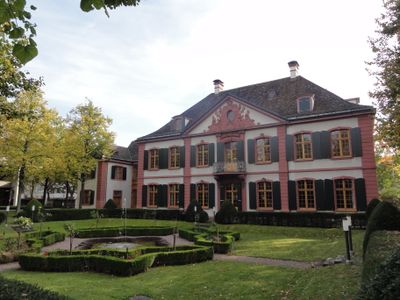
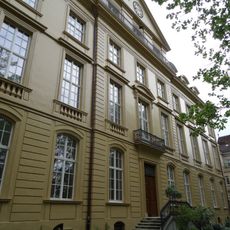
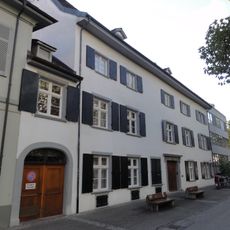
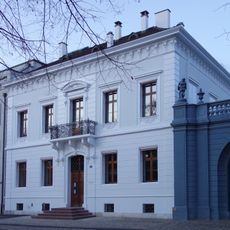
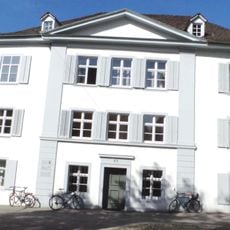
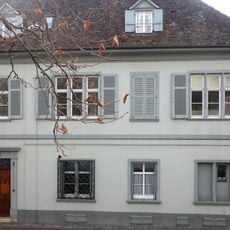
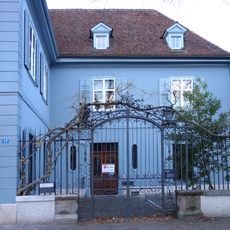
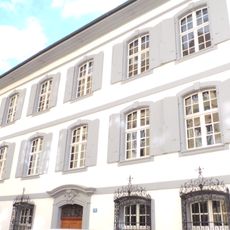
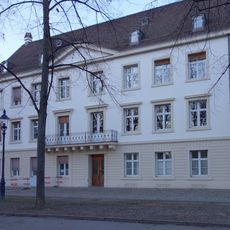
The Holsteinerhof is a two-story baroque building at Hebelstrasse 32 in Basel, with a hipped roof, seven window axes, a central cornice, and two decorated dormers. The two middle pilaster strips appear to support the portal and divide the front into a 2–3–2 window pattern. The three central axes, portal, and gable under one hipped roof became the model for Basel's city and garden palaces.
The plot belonged to dyer Theodor Ruprecht, who sold it in 1696 to Duchess Augusta Maria of Schleswig-Holstein-Gottorf, a refugee from the Palatine War of Succession. Samuel Burckhardt built the house, first called "Zur Pfalz"; in 1743 it passed to Samuel Burckhardt-Zaeslin, who had Johann Jacob Fechter remodel it by 1752. In 1794–95 it hosted Franco-Prussian talks, and in its music room the peace with Spain was signed on the night of 23 July 1795.
In the 1700s, this residence became a meeting place where intellectuals and political figures gathered for discussion and exchange. These gatherings shaped the intellectual life of the city during that era.
The building now serves as administrative headquarters for the University Hospital Basel and can be viewed from outside. The historic facade is easily visible from public areas and the property is centrally located within the old town.
The 1795 peace with Spain was signed in the house's music room, not the garden; the Spanish envoy Domingo Gabriel de Iriarte y Nieves Ravelo lodged next door on Ochs's advice so the talks stayed secret. The earlier talks with Prussia had opened on 4 August 1794 in the Green Room.
The community of curious travelers
AroundUs brings together thousands of curated places, local tips, and hidden gems, enriched daily by 94,622 contributors worldwide.