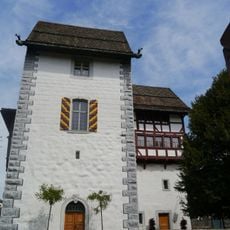
Zurlaubenhof, Zug, Baroque manor in Zug, Switzerland
Zurlaubenhof is a Baroque estate in Zug whose manor house was built between 1597 and 1621, with the St. Konrad chapel consecrated in 1635, a tenant house from 1645, and a two-storey loggia added in 1736. A covered passage links the manor to the loggia and to the White Hall in the tenant house. The manor's third floor holds a panelled festival hall with wall and ceiling paintings.
The Zurlauben family acquired the Schildhof in 1616, when Conrad Zurlauben bought it from farmer Rudolph Stocklin for about 2,000 guilders. The manor house was likely built from 1597 on a plot that had been vineyard land. The estate left family ownership in 1794, when Beat Fidel Zurlauben sold it to Kaspar Bartholomäus Landtwing.
The third floor of the mansion contains a banquet hall decorated with period wall and ceiling paintings reflecting Swiss aristocratic traditions.
The city of Zug bought the estate in 2022 for 65 million Swiss francs after a referendum approved the purchase with over 90 percent support. The property lies within walking distance of downtown Zug. The buildings are not described in the sources as open to visitors, so access to the interior should be confirmed with the city before planning a visit.
The name Schild in the 1277 Kappel Abbey document likely refers to the raised ground on which today's St. Michaels Church stands, not to a building. The farm was split into parcels in the 16th century; the northern plot, usable as vineyard, passed from Heini Müller to captain Thomas Stocker in 1529 and probably carried the manor house from 1597.
The community of curious travelers
AroundUs brings together thousands of curated places, local tips, and hidden gems, enriched daily by 94,411 contributors worldwide.