Yarlung Tsangpo Grand Canyon, Canyon and nature reserve in Tibet Autonomous Region, China.
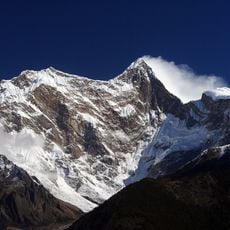
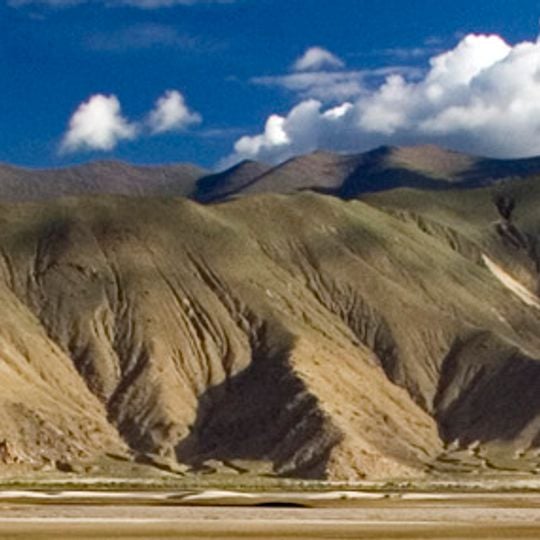
The Yarlung Tsangpo Grand Canyon is a gorge on the Yarlung Tsangpo River in southeastern Tibet, running 504.6 km from Pei to the Indian border. Its slopes of tan and gray-brown earth and rock are cut by deep vertical gullies into ridges and ravines, rising from a flat, pale gravel riverbed to a jagged ridge line. The gorge bends around Namcha Barwa (7,782 m) and reaches a maximum depth of 6,009 m.
British interest began in the 19th century, when explorers suspected the east-flowing Tsangpo was the upper Brahmaputra. Since Britons could not enter Tibet, the Sikkimese agent Kinthup was sent in 1880 to release 500 marked logs; he was sold into slavery, escaped, and the logs were never checked. In 1913 Frederick Marshman Bailey and Henry Morshead confirmed the river connection. Permits resumed in the 1990s.
The Pemako area around the Tsangpo Badong falls is sacred to Tibetan Buddhists, whose Monpa guides kept the falls hidden from outsiders, including Chinese authorities, until a 1998 team reached them. The gorge's climate spans subtropical forest to Arctic tundra, and local tribes hunt the rare takin.
Visiting requires obtaining special permits in advance due to restrictions in this protected region. Travel during spring or autumn brings the most favorable weather for exploration and trekking.
In 2023 a South Tibetan cypress (Cupressus austrotibetica) measured 102.3 m was found in the gorge, judged the tallest tree in Asia. The canyon's core gorge, from Xixingla to the Parlung Tsangpo confluence, holds four waterfall groups with main drops of 30–35 m, including Rainbow Falls and Hidden Falls.
The community of curious travelers
AroundUs brings together thousands of curated places, local tips, and hidden gems, enriched daily by 94,964 contributors worldwide.