Chest opened
+${chestReward.xp} XP
Explorer
NOUVEAU ×${chestReward.collectible.quantity}
tapez pour fermer

See the monuments around you in AR Open chests in the app

Around Us is built for your phone — point your camera at the streets and discover the monuments and places around you in augmented reality. Around Us is built for your phone — chests unlock when you walk, explore and capture nearby places.

•

Enable Location

We need your location to show you interesting places around you

Discover nearby places

Find interesting locations and hidden gems around you

Precise directions

Get accurate directions and distances to places

Your location is never shared with other users. It's only used when you tap the location button.

Forbidden City

Log in to your account

Start exploring — it's free

Trusted by 93,639 travelers worldwide

Continue with Google
Continue with Apple
or

We will send you a code to connect

By continuing, you accept our Terms and Conditions and our Privacy Policy

Check your inbox

We've sent a pincode in your inbox. Please enter the code below.

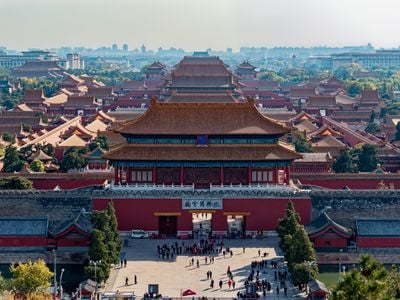
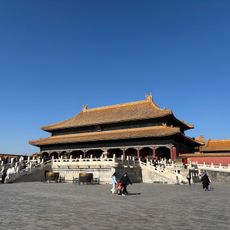
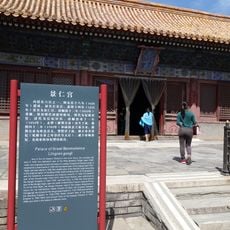
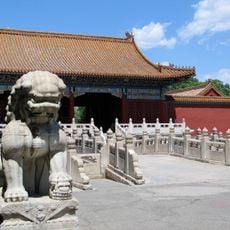
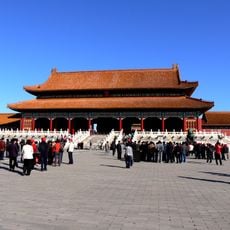
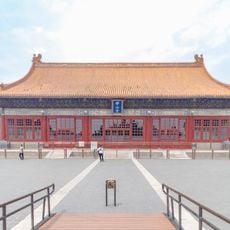
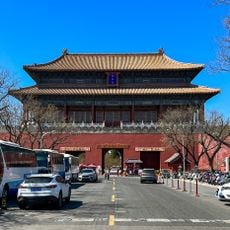
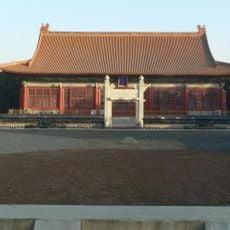
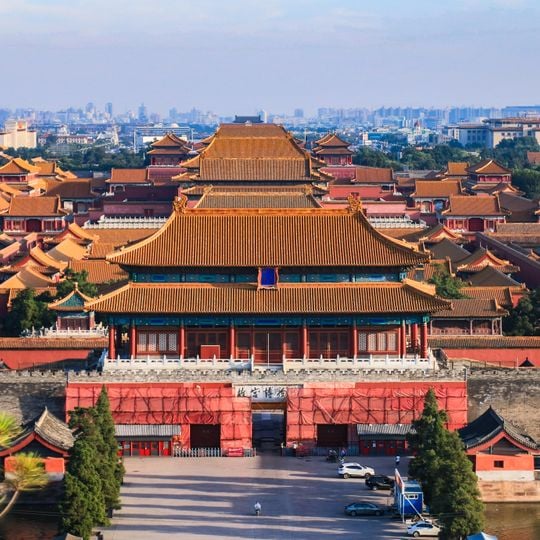
Forbidden City, Imperial palace complex in central Beijing, China

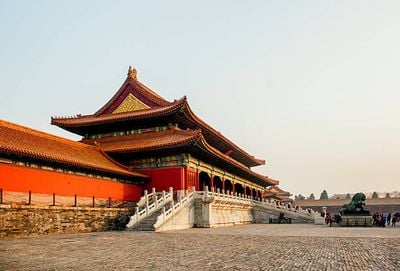
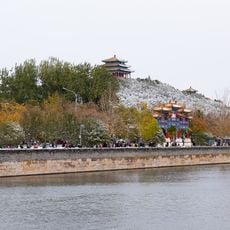
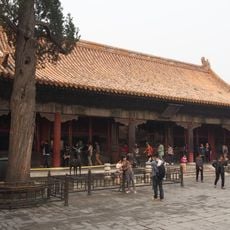
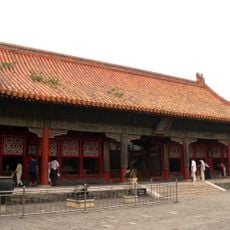
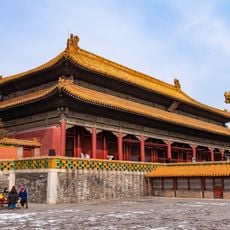
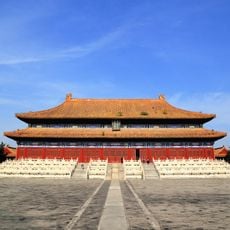
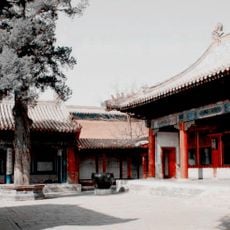
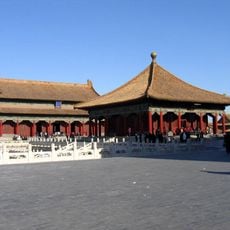
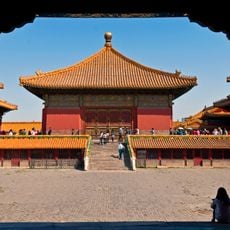
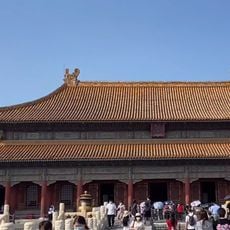
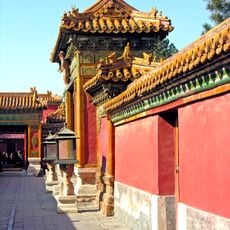
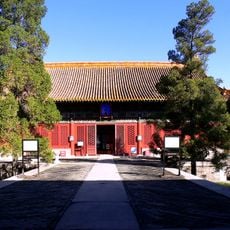
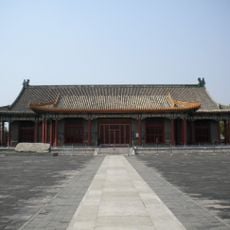
The site spans 72 hectares (178 acres) with nearly one thousand structures enclosed by a 10-meter (33-foot) high wall and a 52-meter (170-foot) wide moat. Main buildings display curved roofs covered with yellow glazed tiles supported by massive wooden columns. Multiple courtyards link various pavilions, halls, and residential quarters through a network of gates and bridges.

Emperor Yongle of the Ming Dynasty initiated construction in 1406, employing over one million workers for a project that lasted 14 years. Twenty-four emperors from two dynasties governed China from these halls until Puyi abdicated in 1912. The site opened as a public museum in 1925 and gained UNESCO World Heritage status in 1987.

The name Zijincheng, first recorded in 1576, links the palace to the Ziwei Star, home of the Jade Emperor in Chinese astrology; the emperor's residence was its earthly counterpart. Qing rulers made nameplates bilingual in Chinese and Manchu and added shamanist elements to the palace. The site is now called Gugong, "Former Palace", and its museum is the Palace Museum.

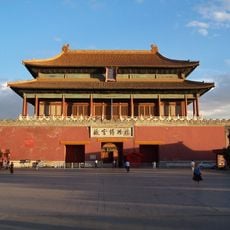
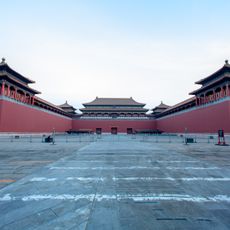
The complex measures 961 meters north to south and 753 meters east to west, enclosed by a 10-meter wall and a 52-meter moat. Four gates pierce the wall: the Meridian Gate to the south, the Gate of Divine Prowess to the north, and the East and West Glorious Gates. Visitors pass from the outer court to the inner court through the Gate of Heavenly Purity.

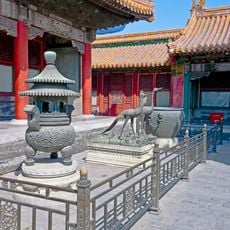
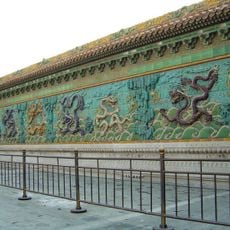
Over 1.8 million works of art and artifacts fill the collection, including ancient bronzes, porcelain pieces, paintings, and calligraphy scrolls. Common citizens faced death penalty for entering without imperial permission, which explains the compound's name. Nine dragons appear frequently in architectural decoration, as this number represents divine power in Chinese numerology.

The community of curious travelers

AroundUs brings together thousands of curated places, local tips, and hidden gems, enriched daily by 93,639 contributors worldwide.

Start exploring
Inception
1420
Architects
Kuai Xiang
Official opening
1923
Part of
Imperial Palaces of the Ming and Qing Dynasties in Beijing and Shenyang, Imperial City
Address
4 Jing Shan Qian Jie, Dong Cheng Qu, Bei Jing Shi, China, 100009
Opening Hours
Tuesday-Sunday 08:30-16:30
GPS coordinates
39.91641,116.39080
Latest update
November 2, 2026 13:45
Military buildings and fortresses worldwide

Military buildings from different countries demonstrate the evolution of defense structures and command centers across centuries. This collection includes medieval castles, early modern fortifications, barracks, command posts, and contemporary military installations. Each structure documents the...

Inside the homes where history is made

Palaces reveal how rulers have held power and shaped nations through the spaces where they lived and governed.

Photo locations in Beijing: social media spots, Instagram places

Beijing offers photographers a mix of imperial palaces, Buddhist temples, traditional hutongs, and contemporary architecture. The city combines the Great Wall at Mutianyu and the Forbidden City with modern structures like the CCTV Headquarters and Bird's Nest stadium. Historic sites such as the...

Reviews

Real people, real opinions — but not verified.

Share your experience
timo2010
timo2010 · Apr 16, 2025

I have wonderful memories of it!

jeff
jeff · Mar 31, 2025
stephren
stephren · Mar 31, 2025

A must-visit and a journey back in time!

Discussions
Start a discussion...

No discussion yet

« Forbidden City - Imperial palace complex in central Beijing, China » is provided by Around Us (aroundus.com). Images and texts are derived from Wikimedia project under a Creative Commons license. You are allowed to copy, distribute, and modify copies of this page, under the conditions set by the license, as long as this note is clearly visible.

Discover hidden gems everywhere you go!

From secret cafés to breathtaking viewpoints, skip the crowded tourist spots and find places that match your style. Our app makes it easy with voice search, smart filtering, route optimization, and insider tips from travelers worldwide. Download now for the complete mobile experience.
Around Us App Screenshot
❝

A unique approach to discovering new places❞

— Le Figaro

❝

All the places worth exploring❞

— France Info

❝

A tailor-made excursion in just a few clicks❞

— 20 Minutes

Around Us
Travel Guide & Maps
Download

Send to your phone

QR Code
1

Open the camera app on your mobile.
2

Point at the QR code with your camera. A notification will appear.

3

Tap the notification to open the link.