Babaoshan Revolutionary Cemetery, Revolutionary cemetery in Shijingshan District, Beijing, China
Babaoshan Revolutionary Cemetery is a burial ground in Shijingshan District, Beijing, China. The grounds span several terraces with tree-lined avenues, memorial plazas, and a central building used for ceremonies.
The location originated on the grounds of a Ming-era temple that once housed retired palace eunuchs. After 1949, the grounds were converted into a burial site for figures who played roles in party and state history.
The name Babaoshan means "Eight-Treasure Mountains". The cemetery grew from the Ming-era Gang Gong ancestral hall and Huguo Temple, whose last abbot, Xin Xiuming, negotiated the eunuchs' relocation with deputy mayor Wu Han. The ash hall, converted in 1958 from the temple's first two halls, holds 28 rooms; the central room displays Zhu De's urn, no. 101.
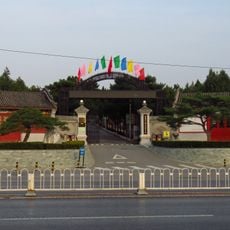
The cemetery is at No. 9 Shijingshan Road in Shijingshan District, western Beijing, with its south gate facing Shijingshan Road and the north side reaching Babaoshan. The main gate faces south, flanked by two stone lions and four old cypresses, with a paved path leading straight to the ash hall. The ash hall is open only to families holding a storage certificate.
The cemetery's central ash hall, built in 1958 from the first two halls of the old Huguo Temple, holds 28 rooms; the highest, Room 1, kept Zhu De's casket at No. 101. The hall is open only to families holding a storage certificate.
The community of curious travelers
AroundUs brings together thousands of curated places, local tips, and hidden gems, enriched daily by 94,070 contributors worldwide.