Hushan Great Wall, Ming Great Wall section in Dandong, China
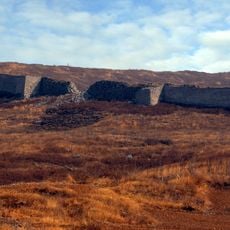
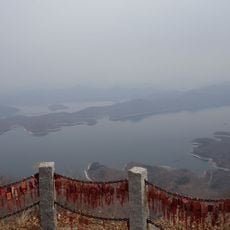
Hushan Great Wall is a defensive fortification roughly 1200 meters long that climbs Tiger Mountain to a height of around 146 meters. The structure consists of gates, watchtowers, and wall sections running along the river that overlooks the Yalu, which forms the border with North Korea.
Ming records date the wall's construction to 1479, the 15th year of the Chenghua era, built against Jurchen raiders striking Ming and Joseon villages. After the Battle of Sarhu it was damaged as a strongpoint against the Later Jin, and once the Qing crossed the pass it lost its military role and was abandoned. Surveys led by architectural historian Luo Zhewen in the late 1980s and early 1990s identified the ruins as the eastern terminus; a section was restored in 1992.
Ming records and poems already described a border wall reaching the Yalu, and the Ming Shilu dates construction to 1479. The Ming official Wang Zhihao climbed Hushan, then called Ma'er Shan, and wrote the poem "Climbing Ma'er Shan and Gazing at Korea". The wall was later abandoned after the Qing crossed the pass.
The site is accessible from Dandong by regular bus service running multiple times each day. The path climbs steeply upward, so wearing good shoes and having a reasonable level of fitness helps, especially for reaching the upper sections.
The wall's identification as the Ming's eastern terminus came only in 1990, when architectural historian Luo Zhewen examined the ruins; the finding extended the Ming Great Wall by over 1,000 km and overturned textbook claims that it began at Shanhaiguan. Some South Korean archaeologists dispute the attribution, arguing the fortifications were built jointly by Ming and Joseon forces against Jurchen raiders.
The community of curious travelers
AroundUs brings together thousands of curated places, local tips, and hidden gems, enriched daily by 92,792 contributors worldwide.