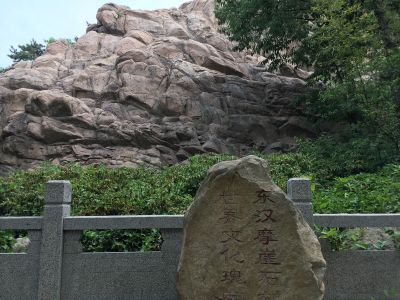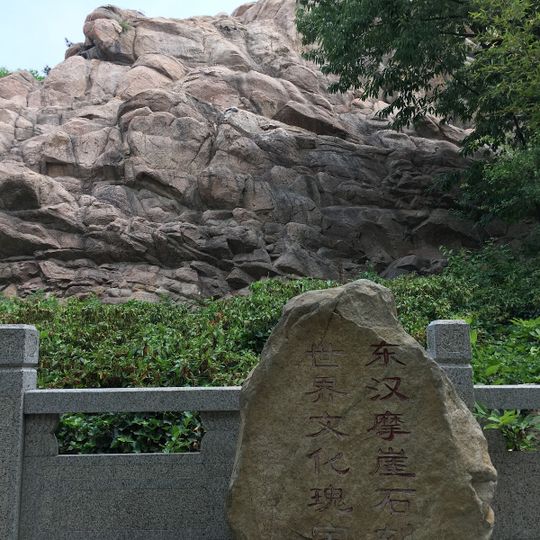
Kongwang Mountain Cliffside Sculptures, Rock sculptures site in Haizhou District, China
Kongwang Mountain carvings are rock sculptures located on a cliff face in Haizhou District, spanning approximately 17 meters wide and 8 meters high. Distributed across the surface are 105 distinct carved images arranged at different levels on the stone wall.
The carvings were created during the Eastern Han Dynasty between the late 2nd and early 3rd century. They represent some of the earliest physical evidence of Buddhism's presence in ancient China.
The central figure is Laozi, 1.48 m tall, wearing a Han-style robe and jinxian crown, seated with hands clasped; the Yellow Emperor (X68), 1.14 m tall, sits at the highest point. Laozi is surrounded by twelve groups of Buddhist images, including a Nirvana scene of 57 figures and a tiger-feeding jataka, reflecting the Eastern Han practice of jointly worshipping Huang-Lao and Buddha and the legend of Laozi converting the barbarians.
The site is located in Lianyungang city in Jiangsu Province and features educational displays about its historical importance. Plan to spend time viewing the carvings at different levels, as the area is generally accessible to visitors.
The carvings contain evidence of one of China's earliest documented Buddhist communities, which formed near Pengcheng during the Han period. This early religious settlement demonstrates how new spiritual traditions were beginning to take root in Chinese society at that time.
The community of curious travelers
AroundUs brings together thousands of curated places, local tips, and hidden gems, enriched daily by 94,461 contributors worldwide.