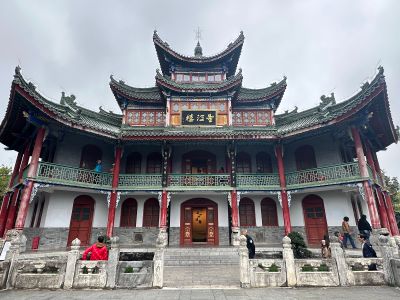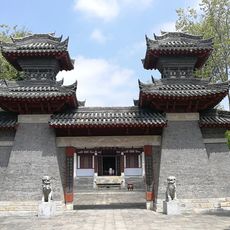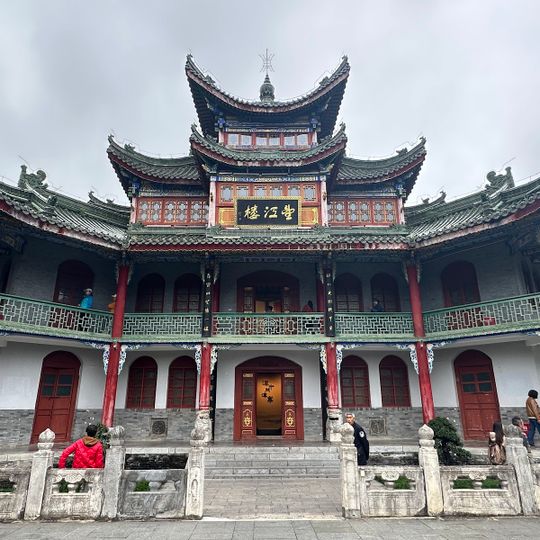
Rock Carvings and Stone Gate on the Baoxie Road, Rock carvings and stone gate in Hanzhong, China
The rock gate along the Baoxie Road is an ancient stone structure carved with inscriptions measuring approximately 16 meters long, 4 meters wide, and nearly 4 meters high. The monument contains multiple layers of carvings from different dynasties, all carved directly into the natural rock face.
The Stone Gate was cut through rock at the southern end of the Bao Valley between 63 and 66 AD, during the Yongping era of the Eastern Han, after Emperor Ming ordered the passage opened. The stele of 148 AD records that the commandery governor Du Jun led 2,690 conscripts from Guanghan, Shu and Ba commanderies to build the Baoxie plank road and tunnel. The 509 AD Stone Gate Inscription by Wang Yuan notes only that the gate was pierced in the Yongping era, not that it was rebuilt then.
The name Shimen, "stone gate", was used because no word for tunnel existed when it was cut. The most celebrated of the more than one hundred inscriptions are the Thirteen Pieces of Shimen, including the Ode to Shimen of 148 AD and the Shimen Ming of 509 AD, which record the cutting of the passage and are studied today as masterpieces of Han and Wei clerical script.
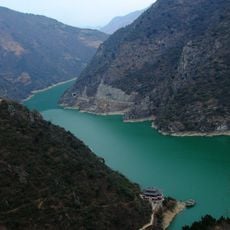
The original carvings were submerged in 1971 when the Shimen Reservoir was built; only 17 steles, including the thirteen "Shimen" masterpieces, were moved to the Hanzhong City Museum. The gate itself no longer exists at the original site. Visit the museum in Hanzhong to see the relocated stones.
The gate was cut without iron tools leaving no chisel marks; Qing-era writers recorded that the rock was heated by fire, then split with vinegar or water and hammers. The 1971 Shimen reservoir submerged the original site, and only 17 carvings, among them the Thirteen Works of Shimen, were moved to the Hanzhong City Museum.
The community of curious travelers
AroundUs brings together thousands of curated places, local tips, and hidden gems, enriched daily by 95,002 contributors worldwide.