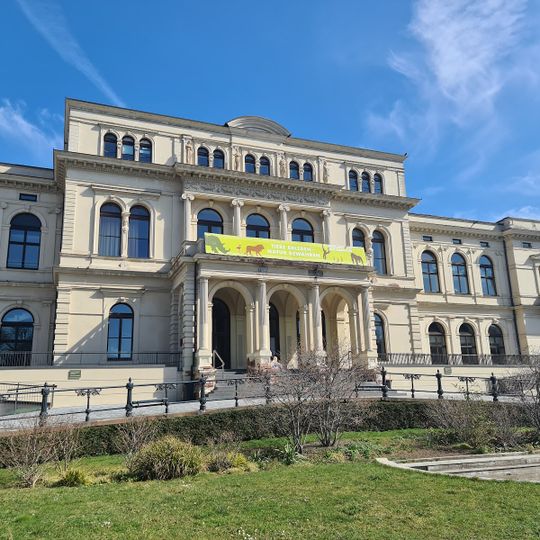
Frankfurt Zoological Garden, Historical zoological institution in Frankfurt, Germany
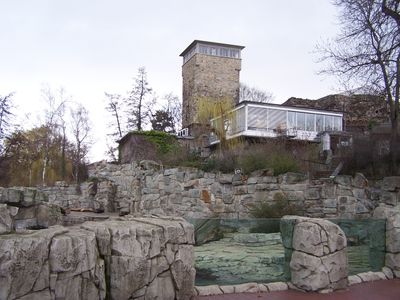
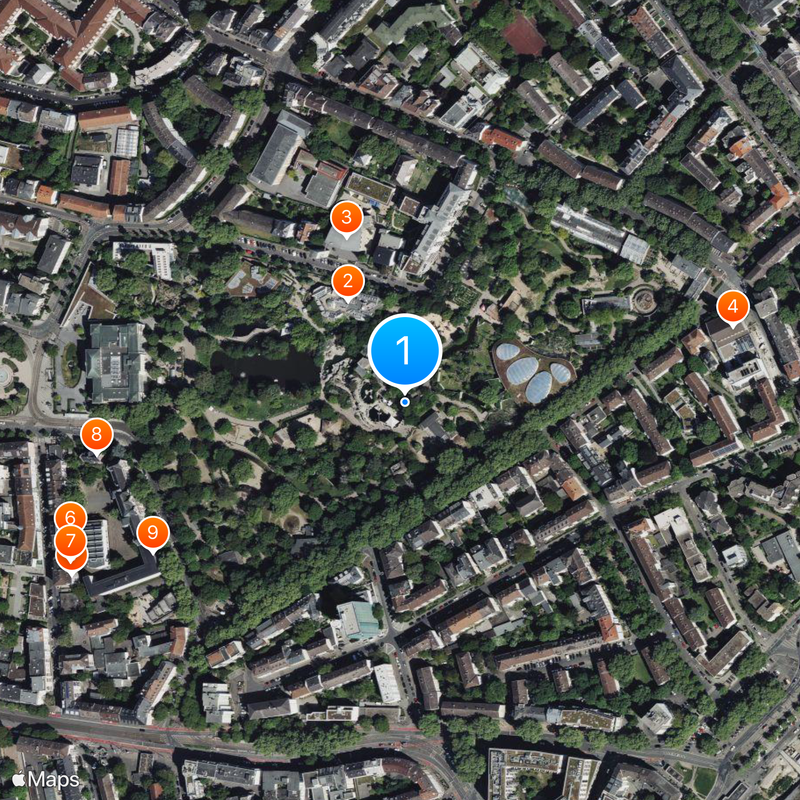
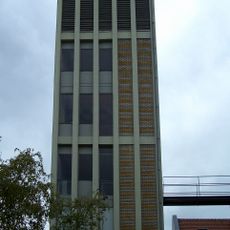
Frankfurt Zoological Garden occupies about 11 hectares at the eastern edge of the inner city, at Alfred-Brehm-Platz in the Ostend. It holds over 4,500 animals of more than 510 species. A stone tower with a band of small windows near its flat top rises above the grounds, next to a lower building with large glass panels; below them, a curved wall of large grey stones fronts an enclosure viewed through glass.
The zoo opened on 8 August 1858 in the Leer'scher Garten in the Westend, initially with herbivores only. Lack of space led to a move on 29 March 1874 to the Pfingstweide, a former parade ground where Napoleon I reviewed troops in 1813. In March 1944, 27 bombs destroyed nearly all buildings; director Bernhard Grzimek reopened it on 1 July 1945.
The zoo's name changed under the Nazis, when the foreign word Zoo was replaced by the German Tiergarten. After 1945, director Bernhard Grzimek funded reconstruction by opening an amusement centre with carousels, a roller coaster, dance evenings and circus shows on the bombed grounds, a move other German zoo directors criticised. The Zoological Society, refounded by Grzimek in 1950, raised millions through raffles and donations for rebuilding.
The zoo opens at different times depending on the season, with longer hours during warmer months. Visitors should wear comfortable shoes since the grounds require walking through different areas.
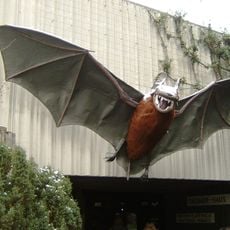
The Grzimek House, opened in 1978, includes a nocturnal animal section where reversed day-night lighting lets visitors watch normally night-active species. It is named after Bernhard Grzimek, zoo director from 1945 to 1974, who kept the bombed zoo in the Ostend open after 1945 instead of moving it to the city outskirts.
The community of curious travelers
AroundUs brings together thousands of curated places, local tips, and hidden gems, enriched daily by 93,643 contributors worldwide.