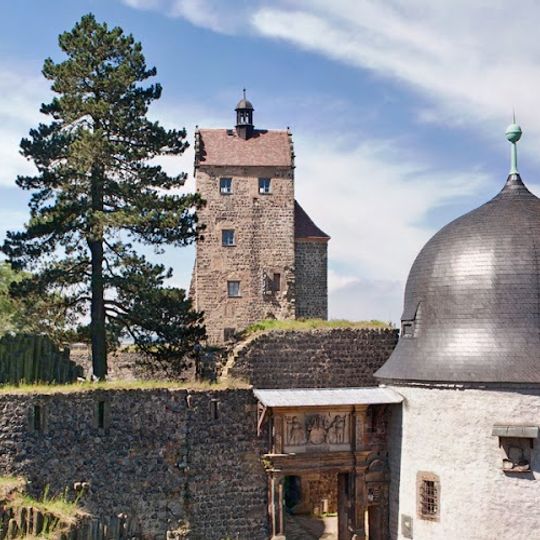
Burg Stolpen, Medieval castle in Stolpen, Germany
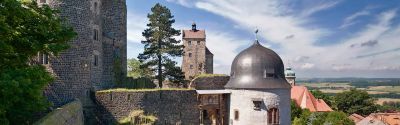
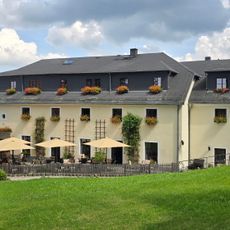
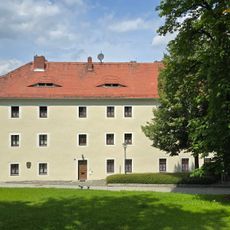
Burg Stolpen sits on a basalt hill and shapes the landscape with its defensive towers and fortified walls rising above the surroundings. The castle encloses a paved courtyard with a well and contains residential rooms and storage buildings from different centuries.
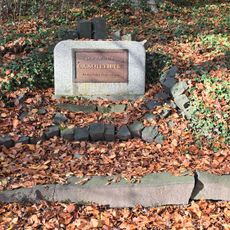
Stolpen was held by the Bishops of Meissen for over three centuries and was at times their main residence; the castle is first documented in 1222, and around 1320 it became the seat of the Amt Stolpen. In 1559 Elector August of Saxony forced the bishop to exchange castle, town and office, ending the episcopal period. The Wettins rebuilt it as a Renaissance palace, and Wolf Caspar von Klengel turned it into a state fortress in 1675. Countess Constantia von Cosel was held here from 1716 to 1765 and was buried in the castle chapel.
The name Stolpen derives from "stolpno", meaning "column place", after the basalt columns visible on the hill. The castle museum documents Countess Constantia von Cosel, mistress of Augustus the Strong, held here from 1716 to 1765; her grave lies in the castle chapel. Visitors can also see the Johannisturm of 1509 and the 1518 granary hall.
The castle stands on a basalt hill at 356 m directly south of Stolpen's historic centre, about 27 km east of Dresden. Visitors enter through the rounded archway of the curving wall; a cobbled path with a fence and lawn beside it leads up to the gate. The grounds were opened to the public on 1 June 1877, and a museum on site covers Constantia von Cosel and the castle's history.
The basalt well in the courtyard was cut by miners from the Eastern Ore Mountains over 24 years and reaches a depth of 84.4 m, making it the deepest well bored into natural basalt anywhere. French troops buried it when they blew up parts of the castle on 25 September 1813; it was cleared again in 1883.
The community of curious travelers
AroundUs brings together thousands of curated places, local tips, and hidden gems, enriched daily by 94,378 contributors worldwide.