Burg Wittelsbach, Medieval castle ruins in Oberwittelsbach, Germany
Burg Wittelsbach is a ruined hilltop castle in Oberwittelsbach, a district of Aichach. Excavated and partly reconstructed foundation walls trace an elongated main castle and two outer baileys across a ridge about 200 metres long and up to 50 metres wide. The late Gothic chapel Maria vom Siege stands on the filled neck ditch, and the neo-Gothic Wittelsbach monument rises nearby.
The castle was first documented around 1000, and in 1119 Count Otto V of Scheyern moved his seat here from Scheyern Castle; from 1120 the counts called themselves Counts Palatine of Wittelsbach, making the site the ancestral seat of the House. In 1209 it was razed in reaction to the murder of King Philip of Swabia by Otto VIII of Wittelsbach, though excavations in 1978–1980 found no fire debris, suggesting the ruins were gradually quarried for building stone.
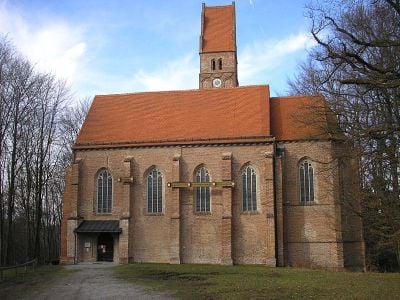
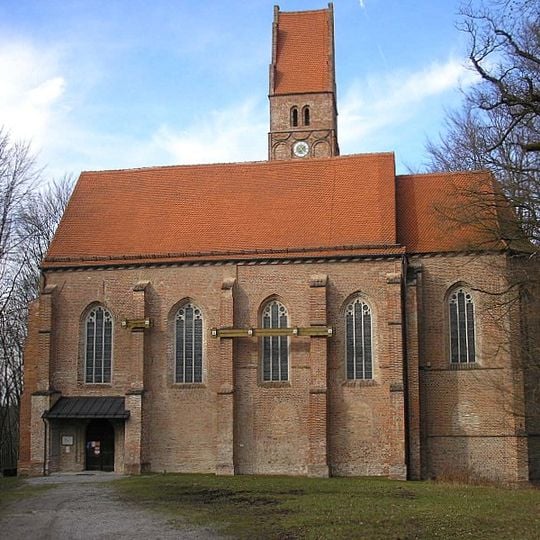
The late-Gothic church Maria vom Siege stands on the former castle hill; tradition calls it a "Sühnekirche" (atonement church) of the Wittelsbachs for the 1208 murder of King Philip of Swabia in Bamberg, though no source confirms this. The castle name likely derives from Latin vitellus, "calf stream", like nearby Kühbach, not from a ministerialis named Vitilo.
Information boards placed throughout the site guide visitors through the layout and explain what they see in the ruins from different periods. The pathways between the remains are walkable though visitors should watch for uneven ground and exposed stone walls.
The 1978–1980 excavations found no burnt debris, so the castle was probably cleared and abandoned rather than stormed in 1209. Its sandstone blocks were then quarried away over time, some of them reused in the church building. The wall courses visible today were raised over the excavated foundations after the dig.
The community of curious travelers
AroundUs brings together thousands of curated places, local tips, and hidden gems, enriched daily by 94,973 contributors worldwide.