Abtei Schweiklberg, Benedictine abbey in Vilshofen an der Donau, Germany
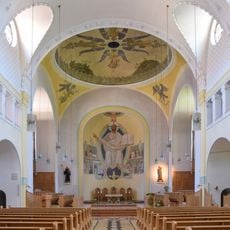
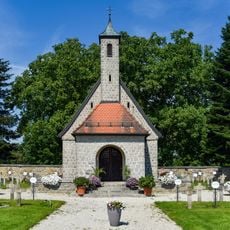
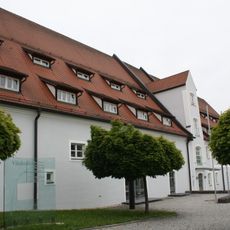
Abtei Schweiklberg is a Benedictine abbey built in the Art Nouveau style with neo-Baroque elements, set on a hill above Vilshofen an der Donau in Bavaria. The complex brings together a monastic church, a large library, exhibition areas, and guest accommodation within a single hilltop site.
Schweiklberg was founded as a priory in 1904 by Father Coelestin Maier with five monks from St. Ottilien, who built a training house for future missionaries. It became an abbey in 1914, with Maier as first abbot, and construction finished in 1925. The Gestapo dissolved it in April 1941; it was returned in 1945. The community peaked at 155 monks before World War II and about 130 around 1960.
The abbey has a long connection to missionary work in Africa, and the exhibition rooms display objects brought back from that period. Walking through these spaces gives a direct sense of how the community lived and worked over many decades.
The abbey sits on a hill and can only be reached by a steady uphill walk, so comfortable footwear is a good idea. Guest rooms are available for overnight stays, and tours of the exhibition spaces can be arranged in advance.
The abbey runs an African museum, also called the Museum of Black Africa, displaying more than 800 ethnographic objects from various African peoples. The pieces come from missionaries returning from assignments, donations and private collections, and are shown in upright and flat display cases.
The community of curious travelers
AroundUs brings together thousands of curated places, local tips, and hidden gems, enriched daily by 92,922 contributors worldwide.