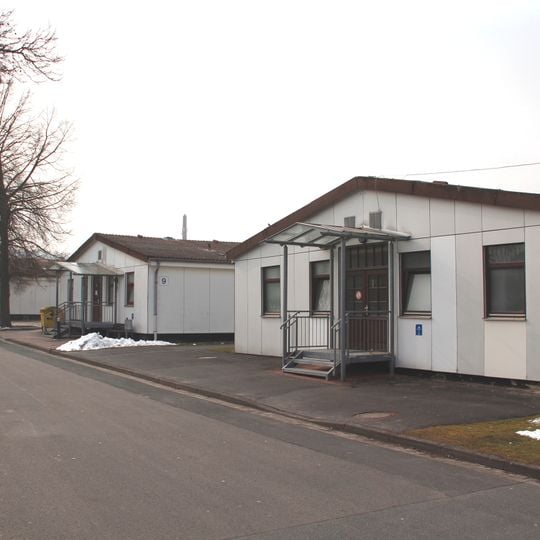
Lager Friedland, Transit camp in Friedland, Germany
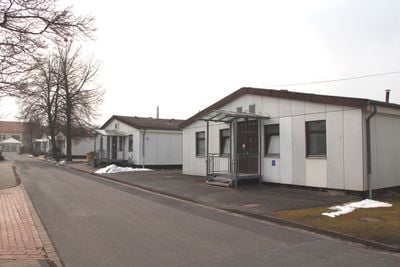
Lager Friedland is a reception camp in Lower Saxony consisting of multiple buildings and facilities designed to accommodate arriving displaced persons. The site contained residential barracks, administrative offices, and service buildings that managed the flow of people through its operations.
The facility opened in 1945 under British control and became a processing point for millions of displaced persons and refugees after World War II. Over the following decades, it handled successive waves of arrivals from across Europe seeking new lives in West Germany.
The camp is nicknamed "Gateway to Freedom" (Tor zur Freiheit). Returning prisoners of war were greeted with the hymn "Nun danket alle Gott", known as the "Choral of Friedland". Since November 1945 a Caritas branch has operated on site, and the Friedlandhilfe association, long led by Johanne Büchting, raised around 100 million DM in donations.
The camp is an active reception facility run by the Landesaufnahmebehörde Niedersachsen, so the grounds are working areas rather than a sightseeing site; access is limited to the Museum Friedland, which documents the camp's history. The site lies in the municipality of Friedland in the Landkreis Göttingen, on the Bebra–Göttingen railway line between Hanover and Kassel.
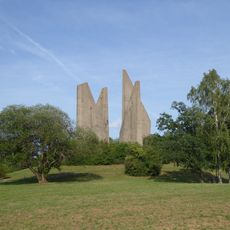
The site's nickname, "Gateway to Freedom", comes from the millions who passed through. Around 4 million people in total have been received here since 1945, including 533,095 Wehrmacht members by the end of that year alone. A memorial on the Hagenberg hill, built in 1967/68, commemorates the returning prisoners of war.
The community of curious travelers
AroundUs brings together thousands of curated places, local tips, and hidden gems, enriched daily by 92,856 contributors worldwide.