Hessian State Museum Darmstadt, Multidisciplinary museum in Darmstadt, Germany
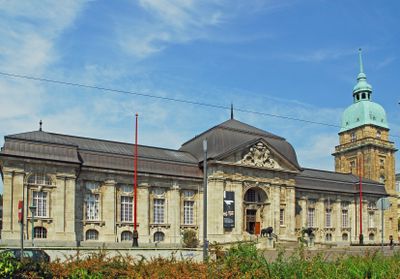
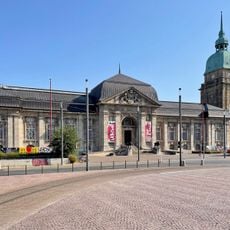
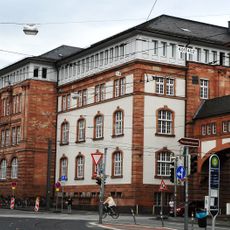
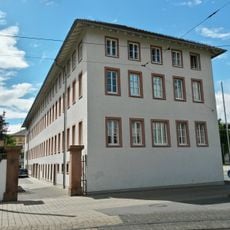
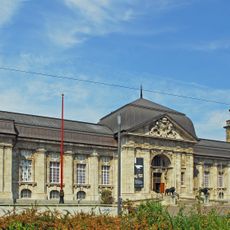
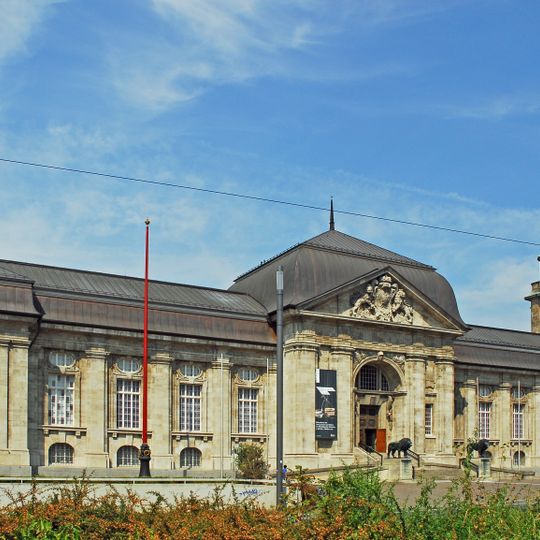
The Hessian State Museum Darmstadt occupies a building begun in 1897 by architect Alfred Messel and opened in 1906. Its stone facade combines a long wing with tall rectangular windows and flat columns with a projecting entrance pavilion topped by a pediment with relief sculpture and a curved grey roof with a small spire. Inside, period rooms include a Pompeian wing with an Oceanus mosaic, Romanesque corridors, a Late Gothic hall and a Baroque hall with a barrel vault.
The institution began in 1820 when Louis I, Grand Duke of Hesse, donated his private collection as its foundation. The works were originally displayed in the Residential Palace before being relocated to a dedicated museum building later.
The museum's name comes from its founding as a state collection of Hesse. Its cultural displays include the world's largest group of Joseph Beuys works, the Block Beuys, in seven rooms, and the Simon Spierer Collection of 20th-century sculpture, donated in 2004. Visitors can request original prints and drawings by Dürer and Rembrandt in the study room.
The museum opens Tuesday through Friday from 10:00 to 18:00, with extended evening hours on Wednesdays until 20:00. The different collections are distributed across several departments, so reviewing the areas of interest beforehand helps with planning your visit.
The American mastodon skeleton known as "Peale's mastodon" was first shown at Peale's Philadelphia Museum and later bought by the Darmstadt naturalist Johann Jakob Kaup. The museum also holds eleven reconstructed hominid busts and ten large habitat dioramas.
The community of curious travelers
AroundUs brings together thousands of curated places, local tips, and hidden gems, enriched daily by 93,520 contributors worldwide.