Museum Fünf Kontinente, Ethnographic museum in Lehel district, Munich, Germany
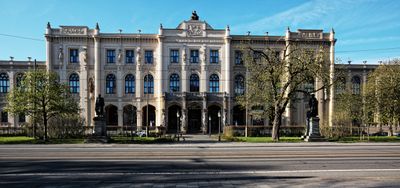
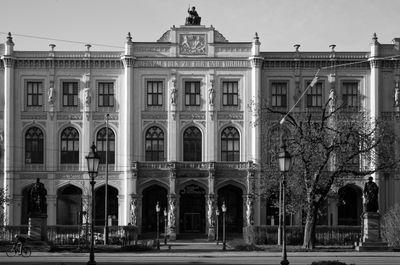
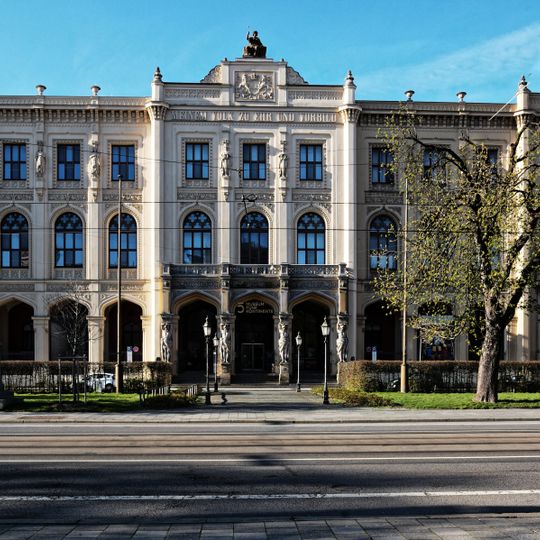
Museum Fünf Kontinente occupies a two-storey stone building on Maximilianstraße, erected 1859–1865 by Eduard Riedel for the Bavarian National Museum in the Perpendicular Style. Its 147-metre front has five blocks of continuous arcades, a nine-bay entrance loggia, and the inscription "EINEM JEDEN VOLK ZU EHR UND VORBILD" beneath the roof. The ethnographic displays cover 4,500 square metres on two floors.
The museum was founded in 1862 as the Royal Ethnographic Collection, the first of its kind in Germany, after Philipp Franz von Siebold proposed such an institution to King Ludwig I in 1835. The building on Maximilianstraße, designed by Eduard Riedel and completed in 1865, originally housed the Bavarian National Museum. The ethnographic collection moved there in 1926, and in 2014 it was renamed Museum Fünf Kontinente.
Objects from Africa, Asia, the Americas, and Oceania fill the rooms, ranging from masks and clothing to tools and religious items. Visitors can observe how different cultures approached similar needs through distinct artistic and practical traditions.
The museum is open Tuesday through Sunday and sits on Maximilianstraße in the city center. The building is fully wheelchair accessible, and the exhibition is organized across multiple floors for easy navigation.
The oldest surviving kayak in the collection dates from 1577, a wooden frame from North America. The South America room also holds feather head trophies from Brazil, and in April 2019 the museum began returning more than 50 ancestral remains to Australia, starting with those of a Gimuy Walubara Yidindji king held since 1889.
The community of curious travelers
AroundUs brings together thousands of curated places, local tips, and hidden gems, enriched daily by 93,464 contributors worldwide.