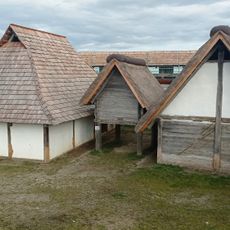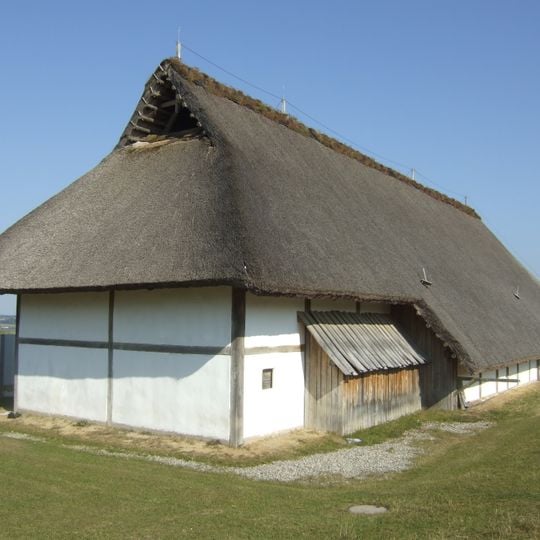
Heuneburg, Celtic hillfort and open-air museum in Hundersingen, Herbertingen, Germany
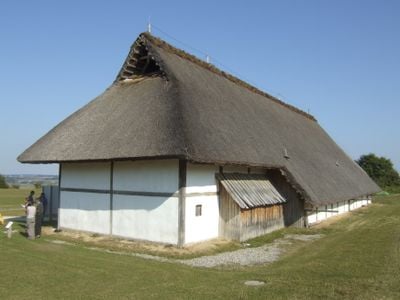
Heuneburg is an early Celtic hillfort on a mountain spur above the Danube, with a citadel measuring about 300 by 150 metres. Around 600 BC its fortifications were rebuilt with a limestone foundation and a mudbrick wall about four metres high, coated in white lime plaster. A reconstructed section of this wall and an open-air museum present the finds.
The settlement was established in the 7th century BCE and functioned as a major trade and power center for approximately two centuries. The site was eventually abandoned as influence shifted to other regions.
The site shows how people traded and connected across vast distances in ancient times. Objects from the Mediterranean, the Baltic, and beyond reveal a network that stretched across the entire continent.
The citadel plateau lies 40 m above the Danube on a steep-sided spur; paths from the Hundersingen open-air museum lead up to it. The outer settlement covers about 100 hectares, and only roughly a third has been excavated, so expect long walks between the core fort, gates and burial mounds. Sturdy shoes are useful on the slopes.
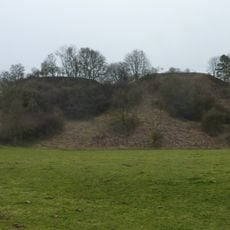
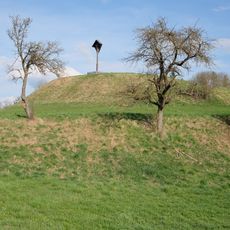
The Hohmichele, one of the largest prehistoric burial mounds in Europe, lies in the Speckhau forest near Altheim-Heiligkreuztal, not beside the citadel. Excavations there in the 1930s examined an elite tomb of the Hallstatt period, showing that the Heuneburg's dead were buried in separate mounds across the surrounding landscape.
The community of curious travelers
AroundUs brings together thousands of curated places, local tips, and hidden gems, enriched daily by 92,829 contributors worldwide.