Saarbrücken Castle, Baroque château in Alt-Saarbrücken, Saarbrücken, Germany
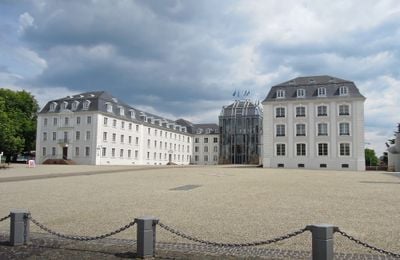
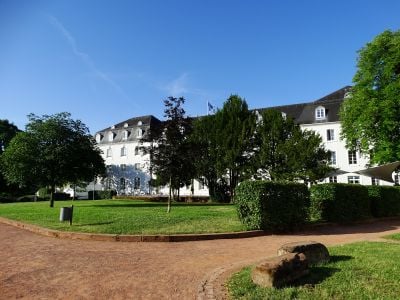
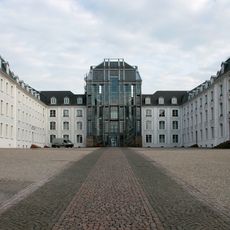
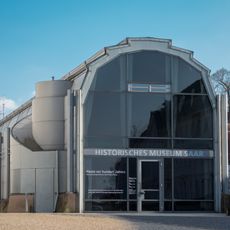
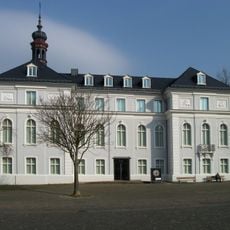
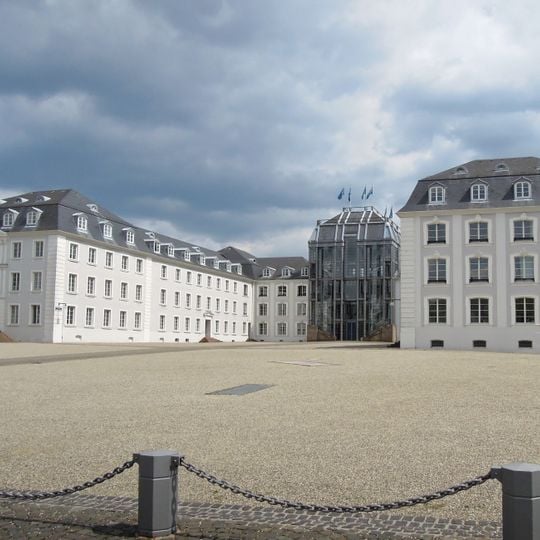
Saarbrücken Castle is a Baroque château on the left bank of the Saar in the Alt-Saarbrücken district. Its white facade has rows of rectangular windows and a dark grey sloped roof with dormer windows; a glass-and-metal central structure with a grid roof links two wings, and four flags fly from its roof. The building now houses the Regionalverband Saarbrücken administration, while the Historisches Museum Saar uses the vaulted cellar and an annex.
A 999 document names the imperial Castell Sarabruca; in 1168 Emperor Frederick I had Count Symon destroy it. Count John IV added bastions and a drawbridge in 1563, and imperial troops wrecked the castle on 16 May 1677. From about 1696 Josef C. Motte rebuilt it in Baroque style for Countess Eleonore Clara, and Friedrich Joachim Stengel proposed a new design in 1739.
The name Saarbrücken derives from the castle's earliest recorded forms, Castell Sarabruca (999) and Veste Sarebrugka (1009), referring to the rock by the Saar. The Historisches Museum Saar, housed in the vaulted cellar and an annex, displays finds from the site, and the casemates under the Schlossplatz have been open to visitors since excavations between 2003 and 2007.
The site is easily reached on foot and offers good views of the baroque architecture from outside. Visitors can book guided tours to explore the underground casemates or use the restaurant for dining inside.
In October 1983, excavation for a technical annex on Talstraße cut through layers of the old fortifications. A triangular corner bastion and part of the southwestern rampart were found and built into the new structure, where they can still be seen. The castle square also hides the foundations of the medieval bergfried, uncovered in 1989.
The community of curious travelers
AroundUs brings together thousands of curated places, local tips, and hidden gems, enriched daily by 92,940 contributors worldwide.