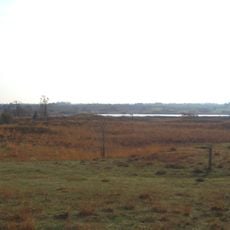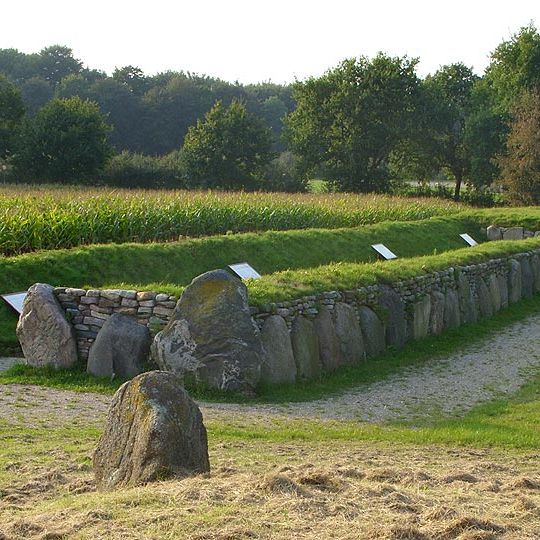
Arnkielpark, Archaeological site with dolmens in Oeversee, Germany
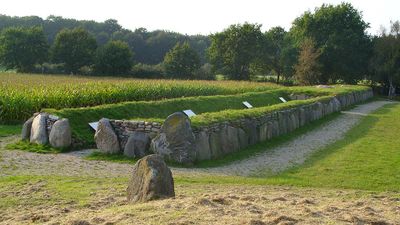
Arnkielpark in Oeversee is an archaeological site with seven megalithic structures, including a round burial mound and six elongated graves made from large stone blocks. The longest burial ground stretches over 75 meters and shows the skilled construction methods used by ancient peoples.
The megalithic tombs at Munkwolstrup were built between 3500 and 2800 BC by the Funnel Beaker Culture. In the 18th and 19th centuries most stones were removed for road building and the reconstruction of the village after fires around 1788. The Arnkielpark was created in the early 2000s, and the 75-metre long barrow was reconstructed by 2003 using 160 boulders from a nearby gravel pit.
The site takes its name from Troels Arnkiel, a pastor and researcher who documented these stone graves during his travels along the Oxen Trail in 1690. Visitors can still trace these early records reflected in how the place is presented today.
The site is accessible by car, bus, and bicycle, with designated parking for visitors. It is best to visit during daylight hours to see and photograph the stone structures clearly.
The longest burial grounds were reconstructed using about 160 stones, each weighing up to three tons. These rocks came from a local gravel pit area and show the effort required for such burial projects.
The community of curious travelers
AroundUs brings together thousands of curated places, local tips, and hidden gems, enriched daily by 94,363 contributors worldwide.