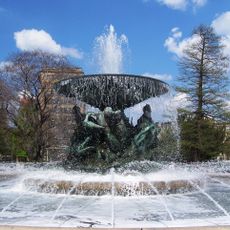
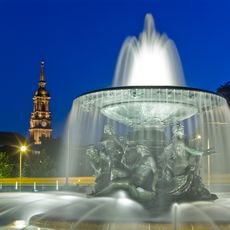
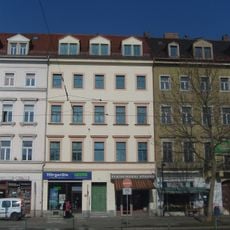
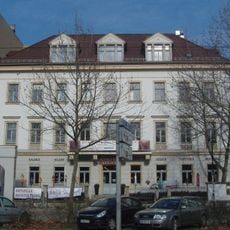
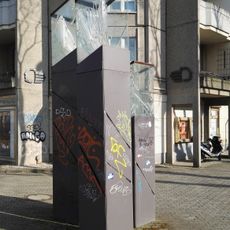
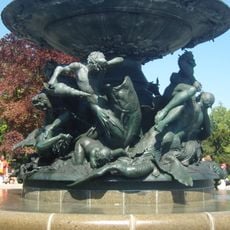
Artesischer Brunnen, Heritage water well at Albertplatz, Dresden, Germany.
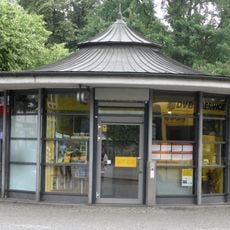
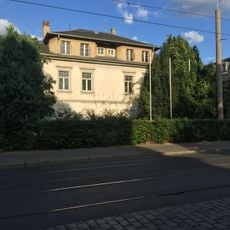
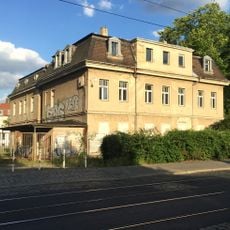
The Artesischer Brunnen is a fountain ensemble at Albertplatz in Dresden, made up of a well house, a drinking fountain and a fountain with a basin. The well house, with a slate-covered pyramid roof, stands on Antonstrasse west of where Königsbrücker Strasse meets Albertplatz; the drinking fountain and the temple-like round fountain basin with goldfish pond, designed in 1906 by Hans Erlwein, are east of it.
Freiberg miners drilled the well from 1832 to 1836 northwest of Albertplatz to supply Dresden's Neustadt with clean water. At 243.25 metres deep, it never fulfilled its purpose because the yield was too small. A simultaneous attempt at an artesian well on Antonsplatz in the old town in 1832/33 failed. The old spring house came from Paul Siemen; the listed ensemble was fully reconstructed by 1990.
The well takes its name from the Artois region of France, where naturally rising springs were first described. The fountain plays inside a temple-like round pavilion with a goldfish basin, designed in 1906 by city building officer Hans Erlwein and rebuilt in 1991 after wartime damage. Its warm spring water let it run in winter, unlike the Albertplatz fountains "Stille Wasser" and "Stürmische Wogen".
The well house stands west of where Königsbrücker Straße meets Albertplatz, while the drinking fountain and the fountain basin lie east of it. The water flowed year-round until it dried up on 21 June 2023. The fountain sits in a 1906 temple-like round structure by Hans Erlwein, rebuilt in 1991 after wartime damage.
The water travels from mountain ranges south of Dresden, passing through layers of chalk and sandstone before reaching the surface. This long underground journey naturally filters and cleans the water.
The community of curious travelers
AroundUs brings together thousands of curated places, local tips, and hidden gems, enriched daily by 94,470 contributors worldwide.