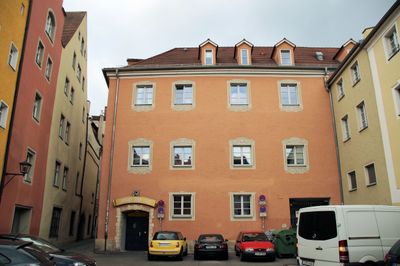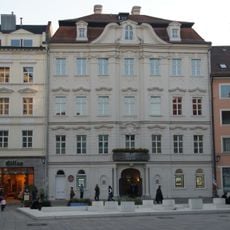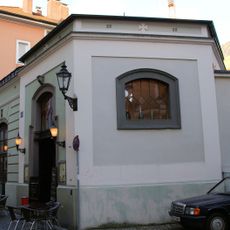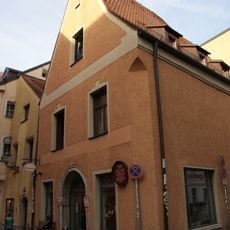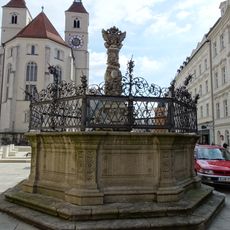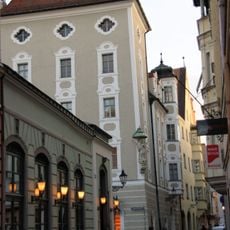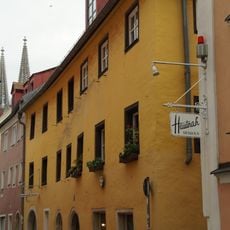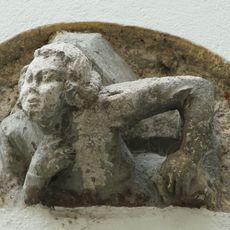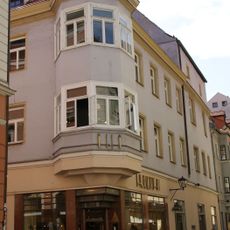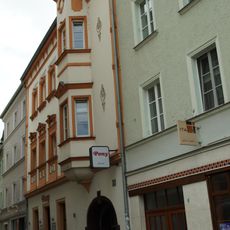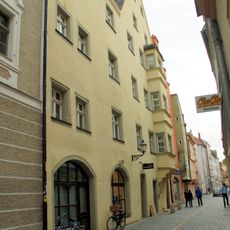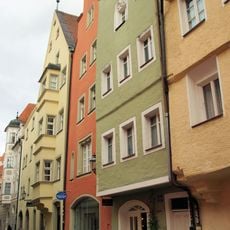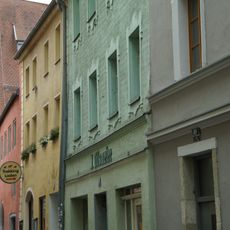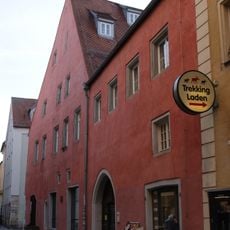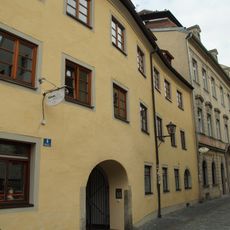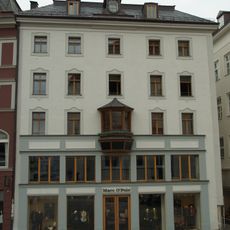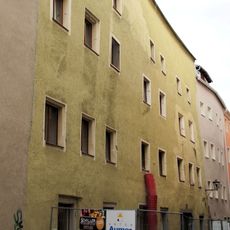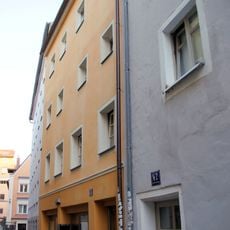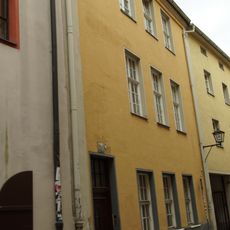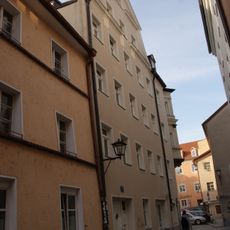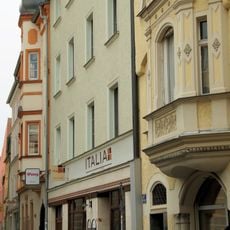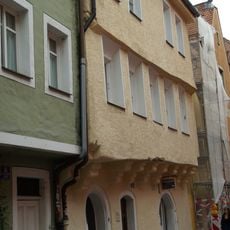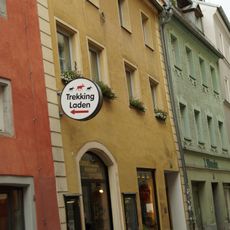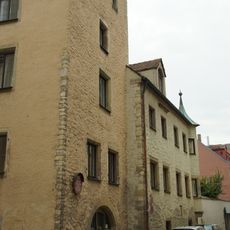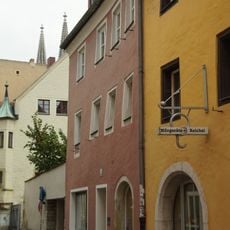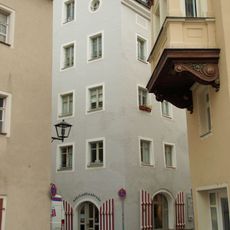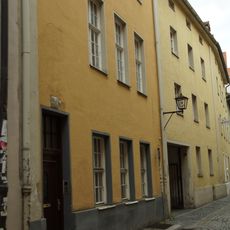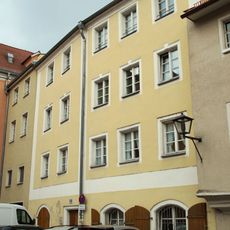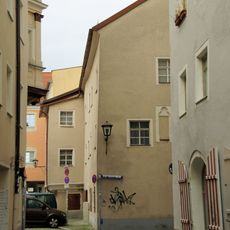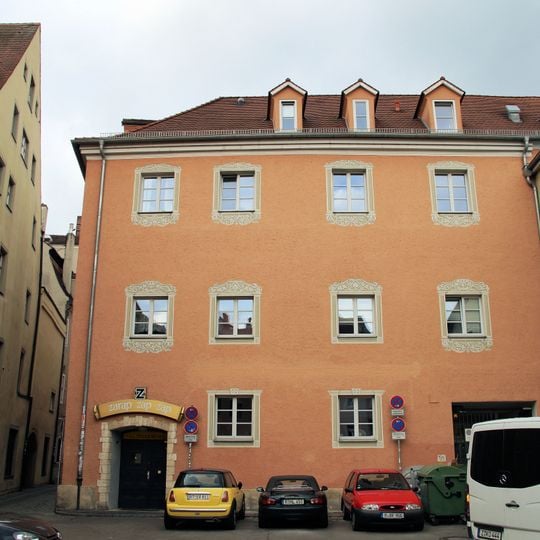
Augustinerkloster Regensburg, Augustinian monastery in Regensburg, Germany.
Augustinerkloster Regensburg was a monastery complex with a church and several buildings situated in the heart of the city. The site stood at the intersection of Gesandtenstrasse and Bachgasse streets and shaped Regensburg's medieval urban layout.
The monastery was founded in the mid-13th century and became Bavaria's most important Augustinian institution. It operated until 1810, when it was dissolved, with most of its structures later demolished in the 19th century.
The monastery housed an order school for the Bavarian province, focused on philosophy and theology. Its members included Ulrich von Straubing, Nikolaus von Laun and Berthold Puchhauser, who opposed John Wyclif and Jan Hus. In 1466 it joined the reformed congregation under provincial Johannes Ludovici.
The monastery site lies on the southwest side of Neupfarrplatz, at the corner of Gesandtenstraße and Bachgasse. The church was demolished in 1838 and the Kreuzkapelle, the former Salvatorkapelle of 1255, was torn down during the building works that began in 1855. The structures standing there today date from those later constructions, so look for the street layout rather than monastic fabric.
The 1255 wooden Salvatorkapelle was built in three days at the crossing of Gesandtenstraße and Bachgasse, after a priest lost consecrated hosts on the Judensteg over the Vitusbach and angels recovered them. Pilgrim income replaced it with stone by 1260. The chapel survived as the Kreuzkapelle, named for a precious crucifix, until its demolition during the 1855 rebuilding.
The community of curious travelers
AroundUs brings together thousands of curated places, local tips, and hidden gems, enriched daily by 94,586 contributors worldwide.