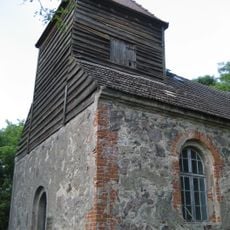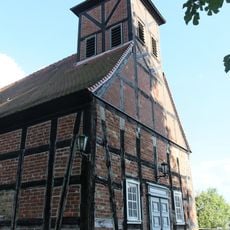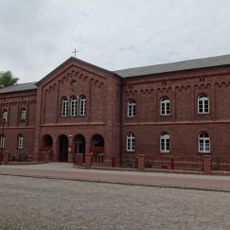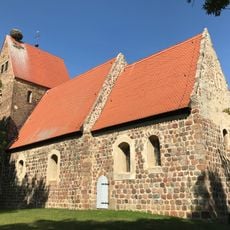
Pasewalk railway station, Railway station in Pasewalk, Germany.
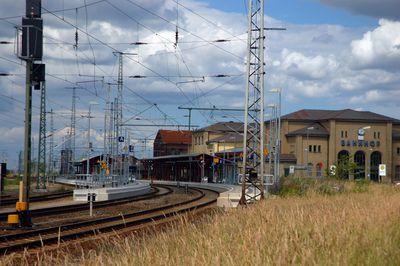
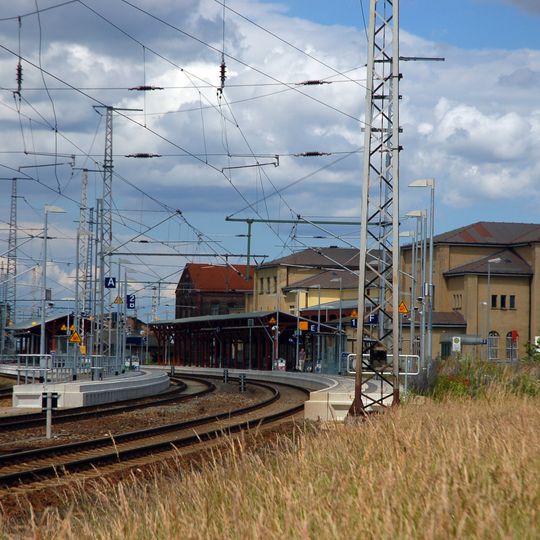
Pasewalk railway station is a rail junction in the town of Pasewalk in Mecklenburg-Vorpommern, where several lines converge. The station has a red brick building from the 19th century and sits at the center of a wedge-shaped track layout with multiple platforms.
The station opened in 1863 and quickly became a key node in the northern German rail network. New lines were added over the following decades, which gave Pasewalk its role as a transfer point between routes heading toward Berlin, Stralsund, and the Polish border.
The station building is a typical example of 19th-century North German brick construction, with red masonry and clean lines. Buildings like this were designed to serve as a formal gateway into the city, and that civic ambition is still visible in its facade today.
The station sits in the center of Pasewalk and can be reached on foot from most parts of the town. Passengers changing trains should check the departure boards on arrival, as platform assignments can change at short notice.
The term "Keilbahnhof" refers to a specific track geometry where lines meet at a narrow angle, giving the site a wedge shape when seen from above. This layout was an engineering response to the challenge of merging several routes at a single point without disrupting the flow of traffic.
The community of curious travelers
AroundUs brings together thousands of curated places, local tips, and hidden gems, enriched daily by 60,000 contributors worldwide.