Ave Maria, Baroque pilgrimage church and monastery in Deggingen, Germany.
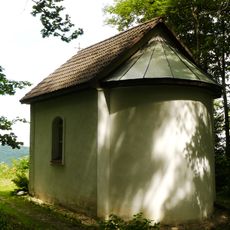
Ave Maria is a late-baroque pilgrimage church and Capuchin monastery on the Upper Filstal near Deggingen, built in 1716–1718. Its interior has rich stucco ornament and paintings, with a high altar surrounded by rejoicing angels that holds a late-Gothic Madonna from the 15th century.
The church was built in the early 1700s as a pilgrimage destination following the baroque architectural style of the region. A Capuchin monastery with matching design was added later, completing the religious complex.
Pilgrimage life centres on six Marian feast days: Candlemas (2 February), the Annunciation (25 March), the Visitation (2 July), the Assumption as patronal feast (15 August), the Nativity of Mary (8 September) and the Immaculate Conception (8 December). A motorcycle pilgrimage takes place on the last Sunday in April, and many couples marry in the church.
The church stands off the B466 between Geislingen an der Steige and Wiesensteig, on the Deggingen side of the upper Fils valley. The Christmas crib stays up over the Christmas holidays and through January and can be viewed outside service times. The site belongs to the Hl. Kreuz parish in the Deggingen-Bad Ditzenbach pastoral unit.
The crib, set up each Advent since the 1950s, is built mostly from bark, roots, moss and cork; its forty figures were made by a Sicilian artist and the background painting by a painter from Schwangau. A stream runs through the scene into a small goldfish pond. Restored in 2007, it stays up through January and can be viewed outside service times.
The community of curious travelers
AroundUs brings together thousands of curated places, local tips, and hidden gems, enriched daily by 94,042 contributors worldwide.