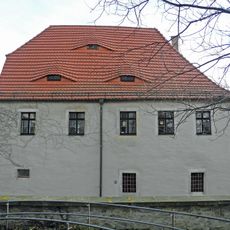
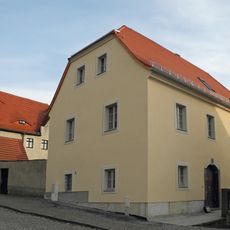
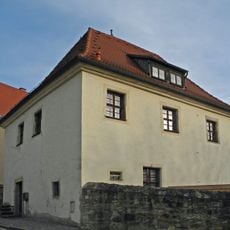
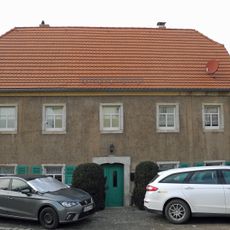
Dohna Castle, Medieval castle ruins in Dohna, Germany.
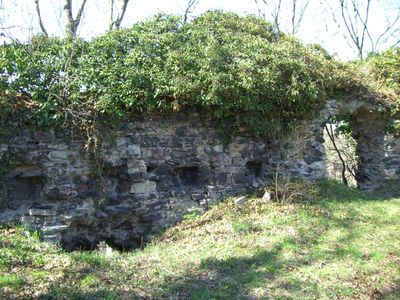
Dohna Castle is a ruined fortress on Schlossberg hill, on the edge of the town of Dohna in Saxony, Germany. Its remaining stone walls trace the outline of a double fortification, with a separate inner zone and an outer defensive ring still visible today.
The fortress was founded around 950 under Emperor Otto I to secure a key trade route between Saxony and Bohemia. After the Dohna Feud of 1402, when it was captured and damaged, it slowly lost its military role and was never fully rebuilt.
The castle's name comes from the Sorbian settlement of Donin below the hill. From 1390 the Dohnaer Schöppenstuhl, a lay court, met here and judged feudal and inheritance cases far beyond Saxony until 1572. The tower on Dohna's market fountain, carved in 1912 by Alexander Höfer, reproduces the tower in the town's oldest seal of 1525.
Marked trails lead up Schlossberg hill to the ruins, which can be visited throughout the year. The path can become slippery after rain, so sturdy footwear is a good idea before heading up.
The oval castle tower on the Fleischerbrunnen well at Dohna's market square, carved in 1912 by Dresden sculptor Alexander Höfer, reproduces the tower shown in the town's oldest coat of arms from 1525. The well itself is named after the butchers' fountain once used by the town's meat traders.
The community of curious travelers
AroundUs brings together thousands of curated places, local tips, and hidden gems, enriched daily by 92,893 contributors worldwide.