Birgelener Pützchen, Marian pilgrimage chapel in Wassenberg, Germany
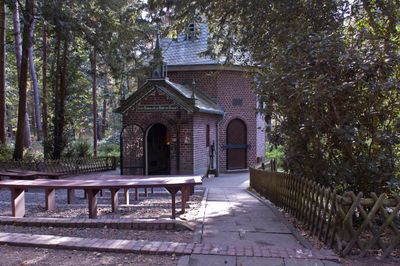
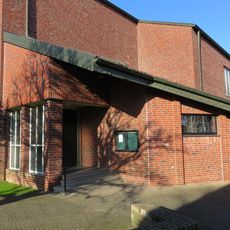
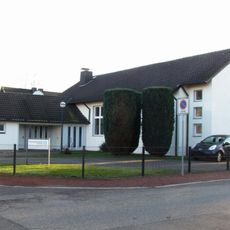
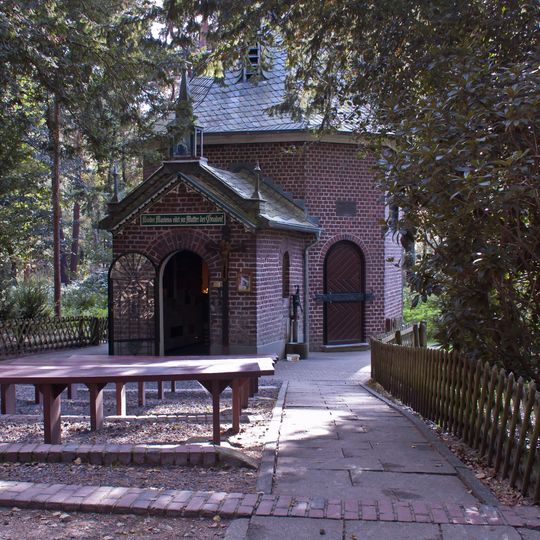
Birgelener Pützchen is a red-brick chapel with a dark grey slate roof and a gabled entrance porch topped by a pointed spire. Above the porch's arched opening, a green sign with gold lettering reads "Bischer Männchen auf der Mutter-Gottes-Statue!". The archway is enclosed by a black wrought-iron gate; to the right, the main wall holds a narrow arched window and a tall, dark wooden door with a rounded top. The octagonal main room was added in 1933 to the smaller rectangular building of 1863.
According to tradition, Saint Willibrord founded Birgelen's hill church around 705 on the site of today's cemetery chapel. A first stone prayer house was built in 1795; around 1850 the spring was enclosed and a chapel built over it. The octagonal main room was added in 1933 to the smaller rectangular structure of 1863. A pilgrimage is documented from 1718.
The chapel draws visitors who come for the May devotions and to drink water from the spring, a practice that connects people to a long tradition of faith. This pilgrimage ritual has shaped how locals relate to the site.
The chapel is easily accessible in a quiet rural area and visitors can reach it on foot from nearby villages. The site is open during prayer times and special feast days when the local community gathers there.
The spring water contains silica compounds that visitors traditionally drink to help with eye problems, a folk remedy passed down through generations. Pilgrims still seek out this water today, trusting in a practice rooted in centuries of local custom.
The community of curious travelers
AroundUs brings together thousands of curated places, local tips, and hidden gems, enriched daily by 93,860 contributors worldwide.