Botanische Staatssammlung München, Botanical research center and herbarium in Munich, Germany.
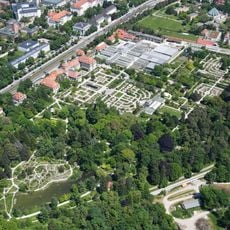
The Botanische Staatssammlung München is a herbarium and biodiversity research center housed in a listed building opened on 10 May 1914, designed by Ludwig von Stempel and Ludwig Ullmann, on the grounds of the Botanischer Garten München-Nymphenburg at Menzinger Straße 67. It holds about 3.2 million dried plant and fungal specimens, making it roughly the 20th largest of some 3,400 herbaria worldwide, and shares the building with the LMU herbarium.
King Maximilian I of Bavaria established this institution in 1813 to house the royal herbarium and university collections. The center grew into one of the world's major botanical research facilities.
The herbarium's official code is M, used when specimens are cited in scientific publications. Its Brazil holdings stem from Carl Friedrich Philipp von Martius, sent by King Maximilian I Joseph on a three-year expedition in 1817 and later appointed curator; his 25,000–30,000 South American vascular specimens represent 7,300 species.
The research collections are accessible for scientific work by advance appointment, while the library welcomes drop-in visitors during operating hours. Most work areas are available on weekdays within regular business times.
Since 2001 the herbarium has curated IndExs – Index of Exsiccatae, a database with bibliographic details on more than 2,400 published sets of dried botanical and mycological specimens held in herbaria worldwide. The lichen collection, one of the largest anywhere, includes nineteenth-century material gathered by Ferdinand Christian Gustav Arnold.
The community of curious travelers
AroundUs brings together thousands of curated places, local tips, and hidden gems, enriched daily by 93,067 contributors worldwide.