Drübeck Abbey, Benedictine monastery in Ilsenburg, Germany
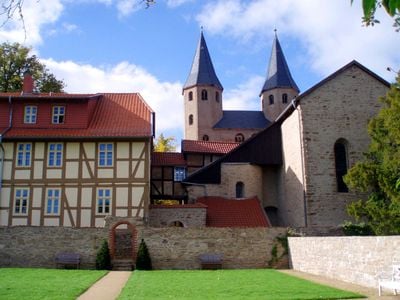
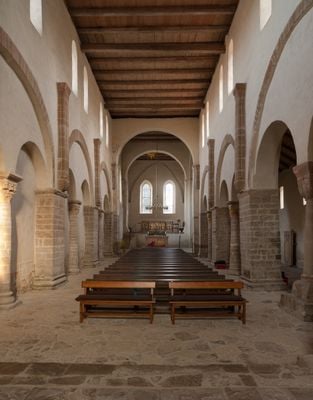
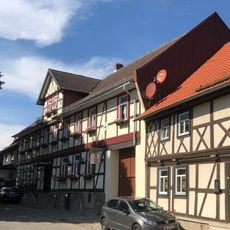
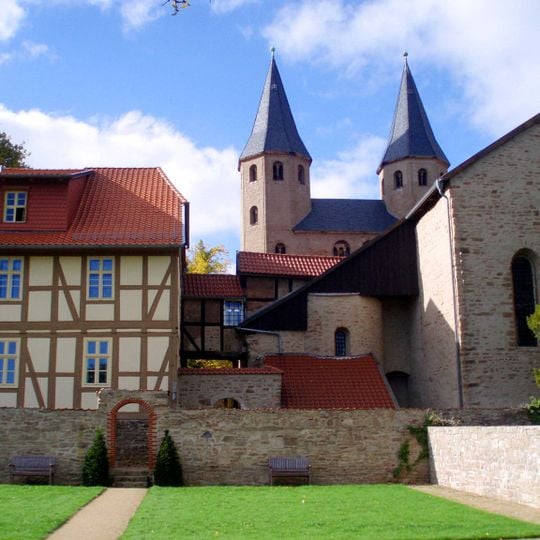
Drübeck Abbey is a former Benedictine nunnery on the northern edge of the Harz in Ilsenburg. Its church of St. Vitus has a flat wooden ceiling, two rows of square stone pillars with rounded arches, and a west front with two towers under dark slate roofs. A half-timbered wing with cream panels and dark beams adjoins the towers.
A forged deed of 877 aside, Drübeck is first documented in a charter of Emperor Otto I dated 10 September 960, which names it Drubechi. In 980 Otto II confirmed the convent's free election of abbesses at his court at Bodfeld, giving it privileges comparable to the imperial abbeys of Gandersheim and Quedlinburg. Monastic life lapsed during the Reformation and Peasants' War; in 1687 the buildings passed to the Counts of Stolberg-Wernigerode, who set up a Protestant convent for women.
The monastery maintains an active Protestant community that uses the spaces for worship and study today. You can observe how the buildings continue to serve their spiritual purpose, with people gathered for theological work and reflection.
The monastery sits at the northern edge of the Harz mountains and is accessible by public transport from nearby towns. Visitors can explore the grounds and gardens at a leisurely pace, with tours available to learn about the buildings and their past.
The Klosterlinde in the courtyard was planted around 1730 during the Counts of Stolberg-Wernigerode's redesign of the grounds. Its trunk now measures 5.56 metres around, and the tree is listed as a natural monument of the Harz district. It stands near the gardens laid out after J. A. Dieckmann's 1737 plan.
The community of curious travelers
AroundUs brings together thousands of curated places, local tips, and hidden gems, enriched daily by 93,459 contributors worldwide.