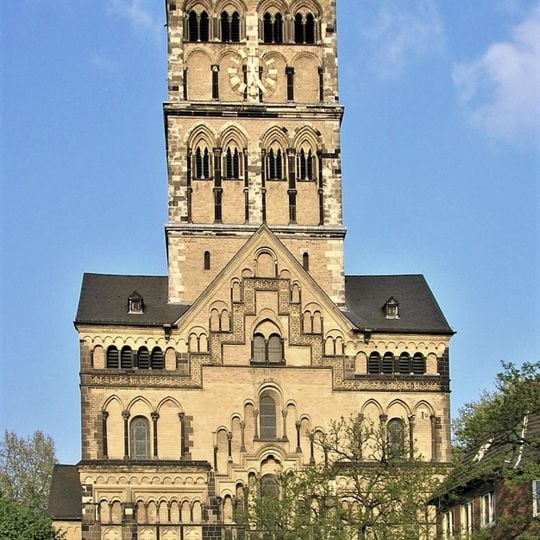
Basilica of St. Quirinus, Minor basilica in Neuss, Germany
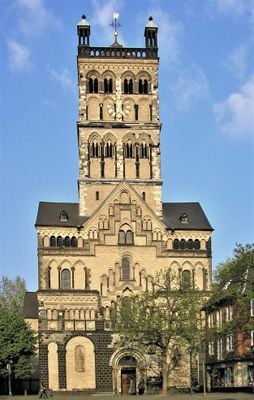
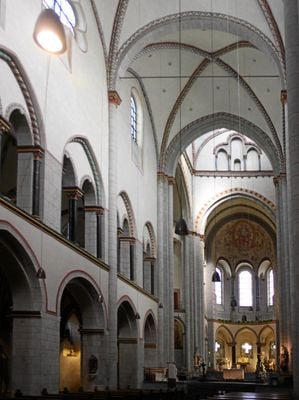
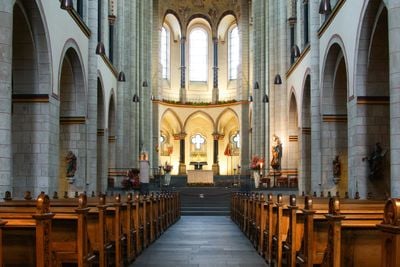
The Basilica of St. Quirinus is a Romanesque church distinguished by a grand west tower, three apses, and walls combining light tuff and dark basalt stone. Inside, a two-story gallery basilica structure accommodated pilgrims visiting the sacred site.
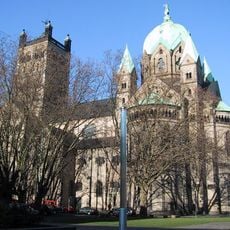
Construction of the present church began on 9 October 1209, when master Wolbero laid the foundation stone, still visible in the south aisle wall; the Latin inscription names Abbot Adolf of Altena and Abbess Sophia of Altena. It replaced earlier churches on a site used since a Roman burial ground, where a cella memoriae apse survives under glass in the floor. The three-conch choir follows Cologne models such as St. Maria im Kapitol and Groß St. Martin.
The church is dedicated to St. Quirinus, a third-century Roman martyr whose relics reached Neuss in 1050, brought from Rome by Abbess Gepa, sister of Pope Leo IX. The resulting pilgrimage brought the wealth that funded the present building from 1209. A glass plate in the floor shows remains of a Roman memorial apse found beneath the church.
The floor of the nave has a glass panel revealing the apse of a Roman cella memoriae, a burial-memorial building found beneath the church. The cornerstone of 1209 is set into the masonry of the south aisle. Look for both while walking the interior; the west tower and its baroque dome are best seen from the outside.
The cornerstone, set into the masonry of the south aisle, records that Master Wolbero laid the first foundation stone on 9 October 1209, during the reign of Otto IV. The Latin inscription names Adolf of Altena as Archbishop of Cologne even though he had already been deposed, apparently a courtesy to his sister Sophia of Altena, then abbess of Neuss.
The community of curious travelers
AroundUs brings together thousands of curated places, local tips, and hidden gems, enriched daily by 93,100 contributors worldwide.