Neue Wasserkunst, Cultural heritage tower in Bautzen, Germany.
The Neue Wasserkunst is a stone water-lifting tower with a domed roof, rebuilt in 1721 on the southern edge of Bautzen's old town above the Spree valley. A covered pipe gallery runs up the slope from the river intake, and the Neutor gate occupies the structure's lower base.
The council planned a second lifting works because the Alte Wasserkunst, built in the 15th century, could no longer meet the city's water demand and more fire-fighting water was wanted. On 24 July 1606 mayor Schönborn and master builder Wenzel Röhrscheidt the Younger laid the foundation stone; the tower collapsed in July 1608, killing a 15-year-old boy, and was rebuilt before winter. The works was inaugurated on 2 July 1610, burned in 1618 and lost its tower top to Swedish troops in 1620. Rebuilt entirely in stone with a domed roof in 1721, it was shut down in 1893 after deep wells replaced river water.
The name refers to the innovative water technology that was considered advanced at the time. Visitors today can observe how this structure became integral to how the city's residents accessed clean water daily.
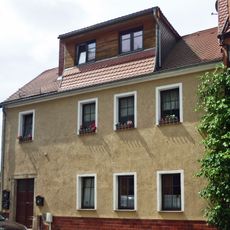
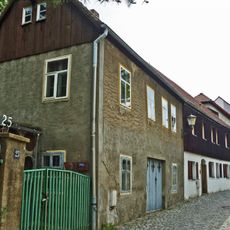
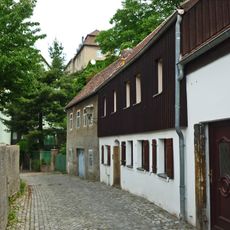
The building is located at Äußere Lauenstraße 58 and is visible from the outside, with the stonework and windows clearly visible. The site is easy to reach on foot and surrounding streets offer space for observing and photographing.
The tower collapsed around 9 p.m. in July 1608 because of unsuitable binding material; two houses in the Fischergasse below were destroyed and a 15-year-old boy died. The tower was rebuilt before winter under the town council's supervision. The building's lower section holds the Neutor, once part of the Äußeres Lauentor.
The community of curious travelers
AroundUs brings together thousands of curated places, local tips, and hidden gems, enriched daily by 92,653 contributors worldwide.