Stuhlmuseum Burg Beverungen, Chair museum in medieval castle of Beverungen, Germany.
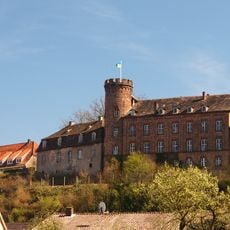
Stuhlmuseum Burg Beverungen occupies the remains of a moated castle of the Paderborn bishops at the Weser crossing. What survives is a rectangular five-storey residential tower, 27 m high, built of rubble stone with a steep sandstone roof and timber-framed gable, plus the so-called Rentmeisterhaus, a timber-framed building erected on the castle wall in 1648/69. A road has divided the grounds since the new Weser bridge was built in 1902.
Around 1330, Bishop Bernhard V of Paderborn, Abbot Ruprecht of Corvey, and the Lords of Brakel founded the castle at the Weser crossing. Before 1348, Bishop Heinrich III added a residential tower on the southeastern ring wall. In 1632, Hessian troops nearly destroyed it during the Thirty Years' War; it was restored by 1654/55. The castle remained with the Prince-Bishopric of Paderborn until secularization in 1802, then passed to Prussia.
The chair museum opened in the castle in 1986 and moved to Lauenförde in 2004. The building later held a museum that closed in early 2012 for renovation work. Since the 2017 sale into private hands, the renovated rooms include a restaurant with a Rittersaal and a wedding room.
The surviving residential tower and the Rentmeisterhaus stand on either side of a road cut through the grounds after the 1902 Weser bridge was built. The tower's two cellar barrel vaults and rooms up to 5 m high are reached on foot; the site is in the town centre of Beverungen, close to the Weser. A restaurant with a knight's hall and a wedding room now occupies the building.
The chair museum opened in the castle in 1986 and moved to Lauenförde in 2004, so the building no longer holds a furniture collection. The castle was sold into private ownership in July 2017 and, during the renovation that followed, gained a restaurant with a knight's hall and a wedding room.
The community of curious travelers
AroundUs brings together thousands of curated places, local tips, and hidden gems, enriched daily by 94,041 contributors worldwide.