Burg Dollnstein, Medieval castle ruins in Dollnstein, Germany
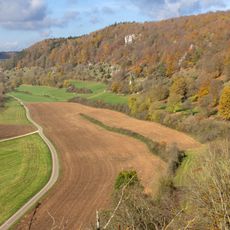
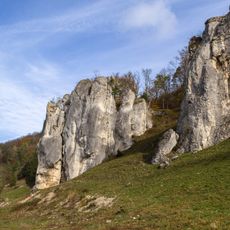
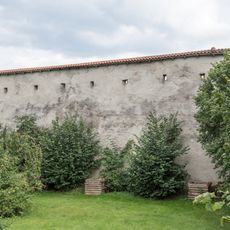
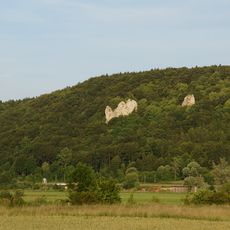
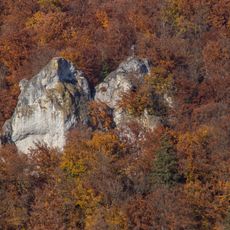
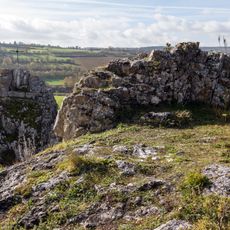
Burg Dollnstein is a castle in ruins standing on a hilltop above the Altmühl River valley, with stone walls and structural remains from multiple construction periods. The ruins show how building methods and fortification designs changed over time as the structure was repaired and expanded.
The castle's origins trace to the Carolingian period; by 1147 it belonged to the Counts of Grögling. In 1305 the Counts of Öttingen took possession, and in 1360 the Lords of Heideck bought it. Bishop Albrecht II of Hohenrechberg acquired castle and market for Eichstätt in 1440; after secularisation it passed to Bavaria in 1802, was auctioned in 1804 and the upper castle demolished.
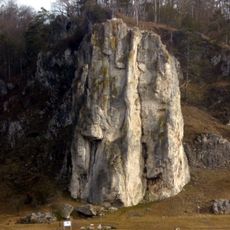
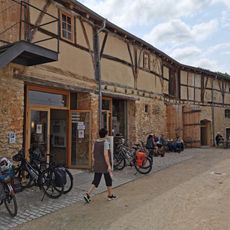
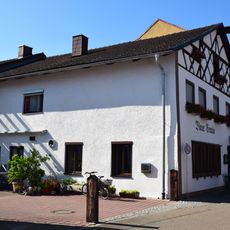
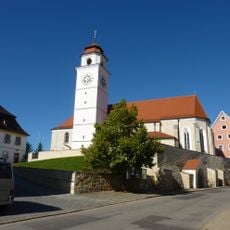
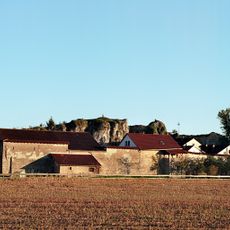
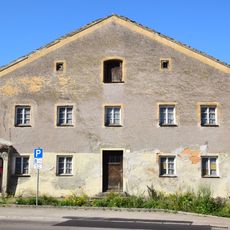
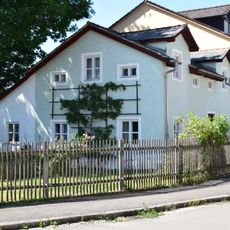
The name Dollnstein probably means "Tola's rock", though this is not certain. The lower castle's late-medieval farm buildings, built in early Altmühl-Jura style, are being restored; the Altmühlzentrum opened there in 2015. A weapons forge is documented in Dollnstein until the 16th century.
The hiking trails to the ruins are well-marked and start from Dollnstein village with parking available at the village edge. The walk itself is moderately easy with a gradual climb, taking about 30 minutes depending on fitness level.
In November 2007, archaeologists digging at the castle found a ceramic vessel filled with silver coins and other precious metal objects from around 1370. Why the hoard was buried there is unknown. The find came during investigations of the upper castle, whose masonry remains are Romanesque, probably 12th century.
The community of curious travelers
AroundUs brings together thousands of curated places, local tips, and hidden gems, enriched daily by 92,619 contributors worldwide.