Burg Schönfels, Medieval castle in Lichtentanne, Germany
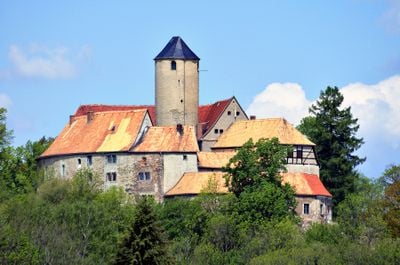
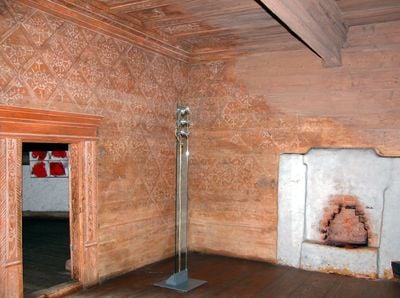
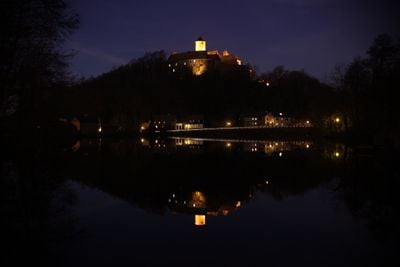
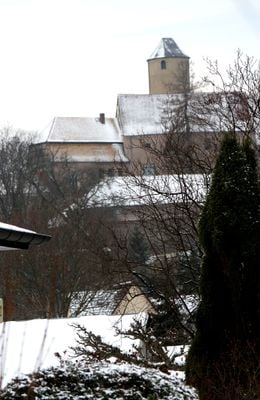
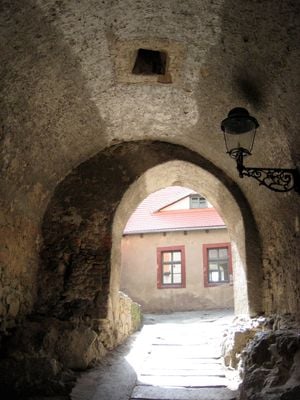
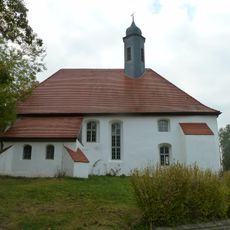
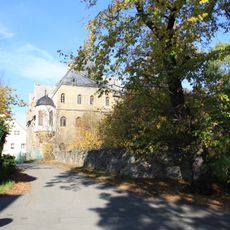
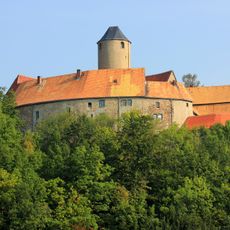
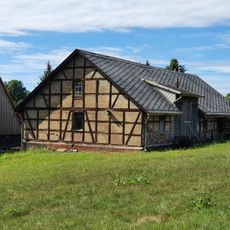
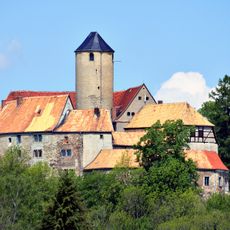
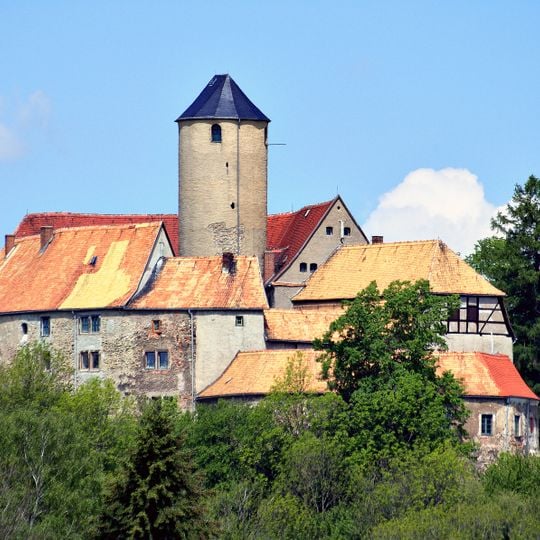
Burg Schönfels is a hill castle on a diabase rock spur above the Schönfels stream in Lichtentanne, Saxony. Its oval core is a two-courtyard complex with a tall cylindrical bergfried capped by a steep dark conical roof, long wings with orange and reddish tiles, a small half-timbered section, a chapel, a late Gothic plank room and a gate hall with sound holes.
Burg Schönfels was built around 1180 as a defensive point on the Saxon marches of the Pleisse country and is first documented in 1225, when the castellani de Schoninvels appear in a charter of Bishop Engelhard of Naumburg. The Reuss family held it as a fief, confirmed by Emperor Charles IV in 1368; in 1398 it passed to the Wettin margraves. It was rebuilt in the 15th and 16th centuries in late Gothic and Renaissance style, and from 1770 to 1945 the Römer family foundation left it largely uninhabited, which preserved its historic fabric.
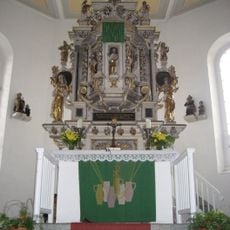
The chapel inside the castle holds a wooden organ from the 18th century that is still played during concerts and events held there today. Small castle chapels with a working organ of this age are rare, which makes this room stand out during a visit.
The castle can be reached by public transport and offers guided tours covering its architecture and local history. It is worth checking in advance whether tours are running and if any concerts or exhibitions are planned during your visit.
The castle stayed almost uninhabited from 1770 to 1945: the Römer-Rauenstein family foundation drew income from the estate but lived elsewhere, so only the forester's lodging in the lower bailey was occupied. This is why the complex was carefully maintained but never modernised, keeping its historic state.
The community of curious travelers
AroundUs brings together thousands of curated places, local tips, and hidden gems, enriched daily by 92,820 contributors worldwide.