Stauf Castle, Castle ruin in Stauf, Eisenberg, Germany
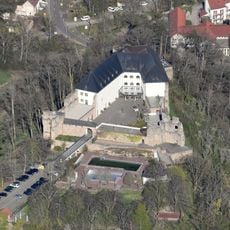
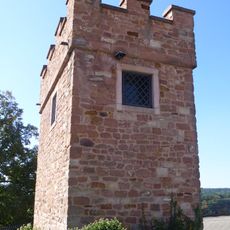
Stauf Castle is a ruined spur castle south of the Stauf district of Eisenberg, on a 327.1 m high ridge above the Eisbach valley. Its remains are divided into an outer bailey (southern bailey), a middle bailey and an inner bailey (northern bailey). The site is reached from Stauf by a woodland track.
Stauf Castle is probably older than 1000 and appears around 1012 as castellum Stoufenburc, making it the earliest documented castle of its kind in the Palatinate. Its first verified mention is tied to a stay by the Salian Duke Conrad I of Carinthia (975–1011). His son Conrad II, who also held counties in the Wormsgau, Speyergau and Nahegau, had several castles slighted after rebelling against King Conrad II, which may explain two centuries of silence. In 1525 the castle, with outer, middle and inner baileys, was destroyed in the German Peasants' War.
The name Stauf comes from the castle's old name Staufenburg, which led many to attribute the site to the Staufer dynasty; in 1913 historian Hermann Schreibmüller instead linked its origin to the Salians and explained the name as coming from later owners. A local legend tells of three sisters at the castle, one blind, and a buried treasure.
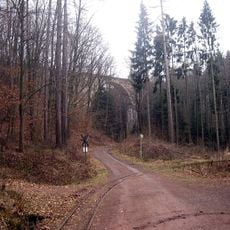
From Stauf a woodland path leads directly up to the castle ruins and can be easily walked. The best time to visit is during dry weather since the path is made of earth and stones and can become slippery after rain.
The castle's old name, Staufenburg, led many to attribute it to the Hohenstaufen dynasty. In 1913 the historian Hermann Schreibmüller rejected this, linking the castle's origin to the Salian era and explaining the name as coming from later owners.
The community of curious travelers
AroundUs brings together thousands of curated places, local tips, and hidden gems, enriched daily by 94,392 contributors worldwide.