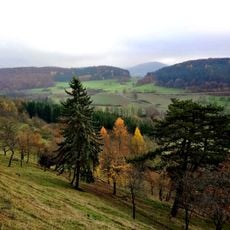
Steckelberg Castle, Medieval castle ruins in Schlüchtern, Germany
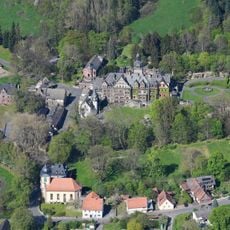
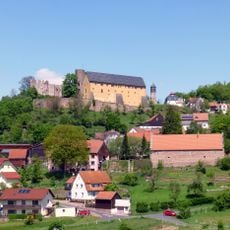
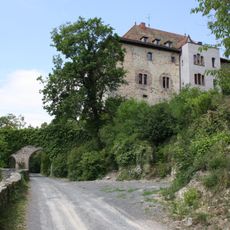
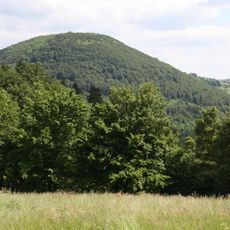
Steckelberg Castle consists of medieval fortress ruins perched on a hilltop east of Vollmerz, where stone walls and foundation remnants still stand. The site displays the layout of a typical medieval defensive stronghold with walls positioned to command views across the surrounding landscape.
The castle was destroyed in 1276 on the order of King Rudolf I, who decreed on 14 October that it be demolished and never rebuilt without imperial leave. In 1388 Ulrich von Hutten built a new castle a few hundred metres above the old site, evading the ban by transferring ownership to the Bishop of Würzburg. Besieged and taken by Bishop Johann in 1458, it was returned in 1459 and rebuilt.
The name comes from the Middle High German Stechelnberc, meaning "steep hill". The castle guarded the old wine route from Fulda to Franconia, a north-south link known since Carolingian times, which passed over the ridge of the Breite First between Veitsteinbach and Sterbfritz. A later door bears the year 1509, though the tower's masonry shows it was built in 1388/89.
A marked walking trail from Ramholz leads up to the castle ruins and is easily reached on foot. After renovation work completed in 2013, sections of the site are safe to explore, though uneven ground and exposed stones require careful footing.
The site is connected to Ulrich von Hutten, a knight and writer born there in 1488 who later became an influential voice in the Reformation movement. This historical link transforms the ruins from mere stone remains into a place tied to broader European religious change.
The community of curious travelers
AroundUs brings together thousands of curated places, local tips, and hidden gems, enriched daily by 93,908 contributors worldwide.