Ruine Karlstein, Castle ruin in Bad Reichenhall, Germany.
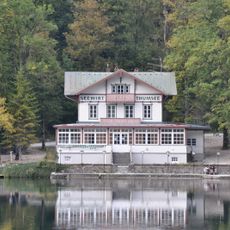
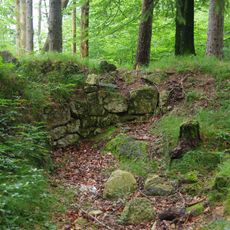
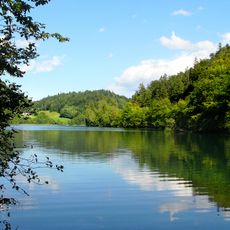
Ruine Karlstein is the ruin of a hilltop castle on a steep rock at 615 m above the Thumsee, in the Karlstein district of Bad Reichenhall. Within the walls survive a late-period round-arched gate, a nearly square cistern that collected rainwater, and a round tower with a high entrance that served as the bergfried, dated to the first half of the 13th century. The last stretch of the hiking path is climbed by a long metal staircase.
Konrad von Peilstein built the fortress shortly before 1150; it was first documented in 1208. In 1218 it passed to the Bavarian duke, who granted castle and Hofmark for life to Reichenhall patricians. Under the Fröschl von Marzoll family it was rebuilt as a Schloss and decayed by the late 17th century.
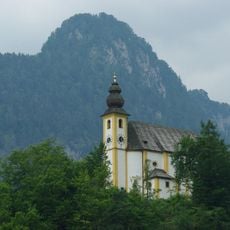
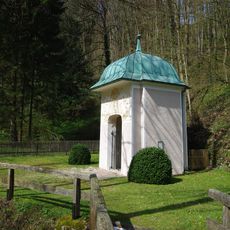
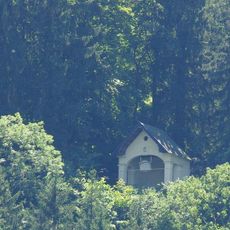
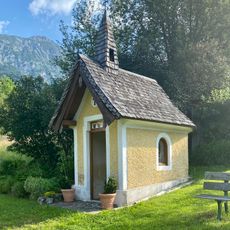
The name Karlstein probably derives from a castle captain named Karl who lived here in the late 12th century. The baroque pilgrimage church of St. Pankraz, built 1687–1689, stands in front of the ruin and replaced an earlier structure; a high medieval outer bailey may have occupied the Pankrazfelsen before it.
The final stretch of the hiking trail climbs a steep rock and is reached only via a long metal staircase. The ruins stand at 615 m above the Thumsee, with the pilgrimage church of St. Pankraz directly in front of them. The site is a station on the roughly 30 km Reichenhaller Burgenweg, a circular trail linking 17 castles, palaces and fortifications.
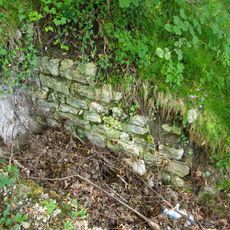
The castle was rebuilt as a Schloss under the Fröschl von Marzoll und Tauerstein family and decayed by the late 17th century; in 1671 the dilapidated western outer wall was demolished. A 6 m² hole in the west wall was closed during the 2012 restoration by the Bavarian State Forests.
The community of curious travelers
AroundUs brings together thousands of curated places, local tips, and hidden gems, enriched daily by 93,627 contributors worldwide.