Burgruine, Castle ruin in Pottenstein, Germany.
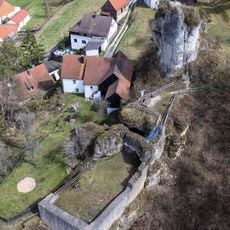
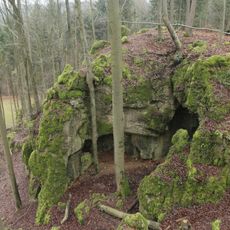
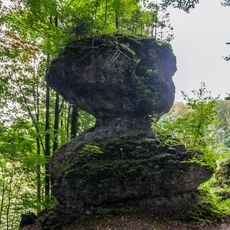
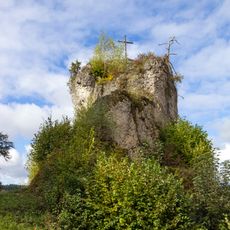
Burgruine Leienfels is a castle ruin in Pottenstein set on elevated terrain in the Bavarian region. The remaining walls and foundations reveal the layout of residential quarters, defensive structures, and how rooms were organized within the fortress.
Leienfels Castle was probably built in the early 14th century by Seibot I of Egloffstein and is first documented in 1372, when Götz of Egloffstein had to enfeoff his share to the Bishop of Bamberg. Troops of Bamberg and Burgrave Frederick V of Nuremberg took it in 1380, and Emperor Wenceslaus ordered its destruction in 1397. Rebuilt, it was sold to Bamberg in 1502, damaged in 1525 and 1553, and after 1643 its bricks were removed and the site abandoned.
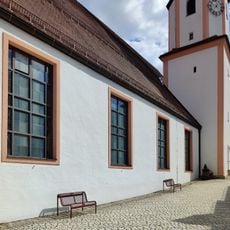
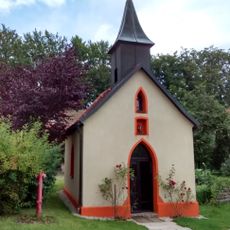
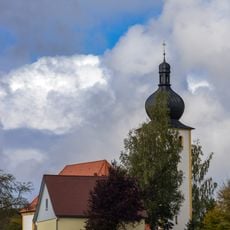
The name probably derives from Löwenfels, "Lion Rock". From 1502 the castle housed a small episcopal Amt of the Bishopric of Bamberg, and in 1594 Leienfels was attached to the Amt of Pottenstein. The village church of Leienfels, which gives the settlement its outline, stands close to the former castle site.
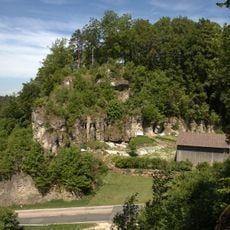
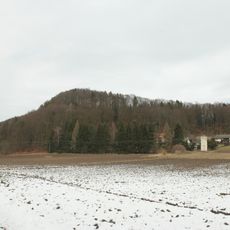
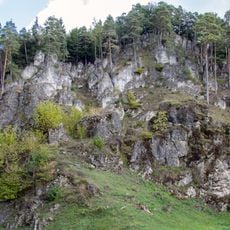
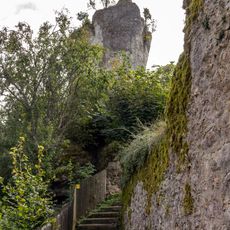
The ruin stands on the 590-metre Leienfelser Schlossberg; the castle grounds begin at the northwestern edge of Leienfels village, so the walk up is short. The site is open ground with no gate, and the terrain around the wall remains and corner tower is uneven. The ruins serve as a viewpoint over the Franconian Switzerland-Veldenstein Forest Nature Park.
The castle was destroyed in 1397 on the orders of Emperor Wenceslaus, after its lord Götz of Egloffstein had already been taken prisoner to Nuremberg in 1380. In 1646 the bricks of the surviving buildings were stripped and the site left to decay. The ruin is recorded as Bavarian monument D-4-72-179-83, an almost triangular layout with remains of the enceinte and a corner tower.
The community of curious travelers
AroundUs brings together thousands of curated places, local tips, and hidden gems, enriched daily by 93,606 contributors worldwide.