Burg Dreieichenhain, Medieval castle ruins in Dreieichenhain, Germany.
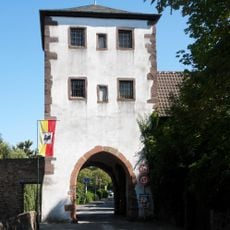
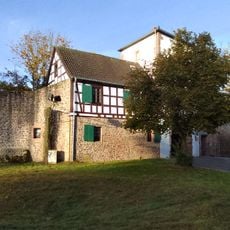
Burg Dreieichenhain is a medieval castle ruin in Dreieich, built from local stone, with a five-story residential tower surrounded by a ring wall and protective moats. The structure sits on raised ground and still shows the main features of a fortified medieval residence.
The castle was built around 1080 as a seat for imperial administrators who oversaw the emperor's hunting grounds in the region. When the original ruling family died out, it was divided in 1255 among several noble families who shared its use.
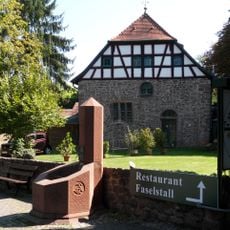
The name Hayn comes from Old High German for "enclosed courtyard". The castle gave its name to the settlement of Dreieichenhain, and the nearby Fronhof, now the Faselstall restaurant, once held kennels for hunting dogs, earning the town the nickname "Hound Stable of the Holy Roman Empire". The castle cellars and the tower base now host public and private events.
The ruin stands on a grassy lawn in Dreieichenhain, with the round bergfried and the jagged wall of the palas facing the visitor. The vaulted cellars of the palas and the lower part of the bergfried are used for public and private events, so parts may be closed during a function. The site is cared for by the Geschichts- und Heimatverein Dreieichenhain e. V., which has owned it since 1931.
The castle is one of the few surviving examples of a Ganerbenburg, a type of shared fortress where several noble families held rights over the same building at the same time. Traces of this arrangement are still visible in the walls and additions that each family left behind over the centuries.
The community of curious travelers
AroundUs brings together thousands of curated places, local tips, and hidden gems, enriched daily by 94,020 contributors worldwide.