Burg Lupburg, Medieval castle ruin in Lupburg, Germany
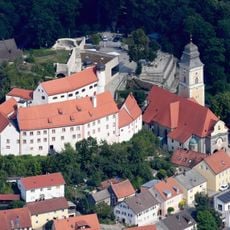
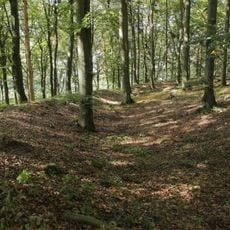
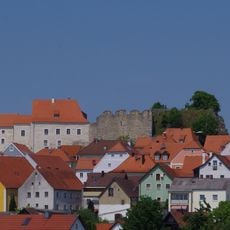
Burg Lupburg sits on a cone-shaped rock formation above the Black Laber Valley and was built from limestone blocks and rubble stones. The walls form a horseshoe-shaped layout with gates, fortifications, and preserved foundations of buildings in the courtyard.
The Lupburg family, ministeriales of the Regensburg burgraves, probably built the castle in the early 12th century; a Ludewicus de Loupurch appears in a document in 1129. In 1300 Konrad von Lupburg, Bishop of Regensburg, transferred Lupburg to the Hochstift Regensburg, and the family died out with him in 1313. After pledges to the Frauenberger and others, Duke Friedrich of Bavaria-Landshut acquired it in 1387; from 1392 it was pledged to Hans von Parsberg, whose family held it until 1572, when Pfalz-Neuburg redeemed the pledge and set up a Pflegamt.
The castle was long a symbol of power for local noble families in the region. Visitors can still see the heavy stone walls that show how important this site was for medieval control of the valley.
The site is accessible year-round and offers paths to explore the ruins and an observation point in the eastern section. The path uphill is steep in places, so sturdy shoes and extra time for the climb are advisable.
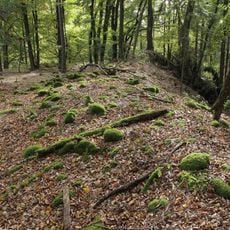
The castle's outer ring wall survives almost completely from the 12th century, built of limestone ashlar below and rubble stone above. In the ruined upper ward, the stump of a bergfried still stands on a rock. The complex is recorded as a Bavarian monument under file number D-3-73-143-4.
The community of curious travelers
AroundUs brings together thousands of curated places, local tips, and hidden gems, enriched daily by 94,263 contributors worldwide.