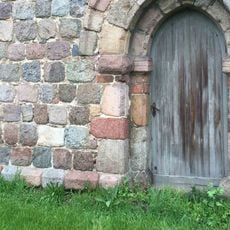
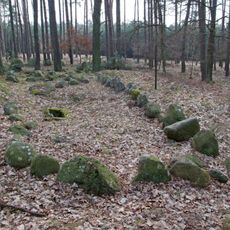
Löcknitz Castle, Medieval castle in Löcknitz, Germany
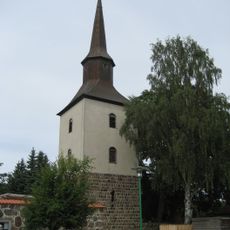
Löcknitz Castle is a ruined castle in Löcknitz, southeastern Mecklenburg-Western Pomerania, of which only remnants survive, notably an octagonal keep. It began as the Slavic stronghold "Lokenitza", probably built of timber posts and surrounded by a ring wall with palisades and ditches, guarding the ford across the Randow. In the 13th century a German castle of masonry replaced it.
A Slavic stronghold called Lokenitza, protected by a ring wall, palisades and ditches, guarded the ford over the Randow. In the 13th century a German castle of masonry replaced it; a Thomas de Lokenitz appears as a witness in a 1212 charter of Duke Bogislaw II of Pomerania. From 1175 to 1385 the castrum Lokenitze cum opido belonged to the table estates of the bishops of Cammin. In 1479 Elector Albrecht Achilles enfeoffed Werner von der Schulenburg with the hereditary captaincy, held by his family until 1688.
The castle remains a defining landmark in Löcknitz's townscape and shows how fortifications once shaped regional settlements. Visitors can still recognize the building traditions that were common to northern German defensive architecture.
Only remnants of the castle survive, chiefly the octagonal keep; the site lies in Löcknitz in southeastern Mecklenburg-Western Pomerania, near the Randow river crossing it once guarded. The castle was given up after 1720 and left to decay, so expect foundations and ruins rather than standing buildings.
The castle's name appears in a 1212 deed of Duke Bogislaw II of Pomerania, where a "Thomas de Lokenitz" is listed as a witness, probably the bishop's bailiff of the castle. From 1175 to 1385 the "castrum Lokenitze cum opido" belonged to the table estates of the bishops of Cammin.
The community of curious travelers
AroundUs brings together thousands of curated places, local tips, and hidden gems, enriched daily by 92,713 contributors worldwide.