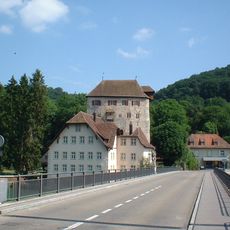
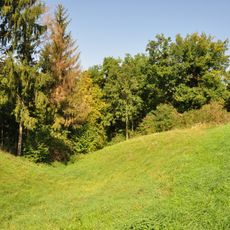
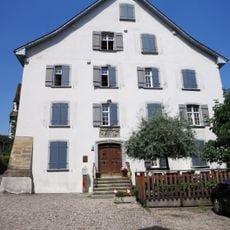
Weisswasserstelz, Medieval castle ruin in Hohentengen am Hochrhein, Germany
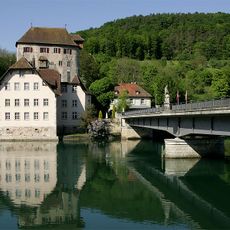
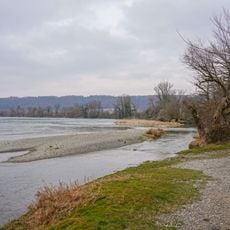
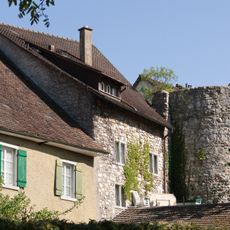
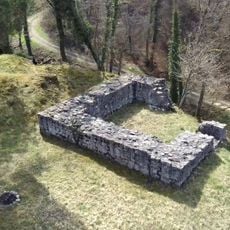
Weisswasserstelz is a castle ruin perched on a 340-meter hill overlooking the Rhine River, featuring fragments of walls and towers. The site displays the fortified layout typical of medieval Rhine Valley strongholds built to control river crossings.
The castle was likely built before the 12th century, as the lords of Wasserstelz appear in 1165 as ministeriales of Reichenau Abbey. In 1343 Abbot Eberhard of Reichenau authorized its transfer to Adelheid von Usenberg, and in 1347 he granted it to Ulrich Winkelshain, who had bought it for 260 marks. In 1639 the Swiss Confederates complained to the Swedes that soldiers were damaging their open house at Wasserstelz.
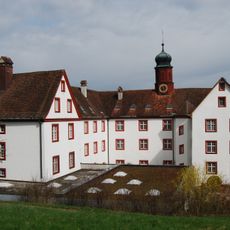
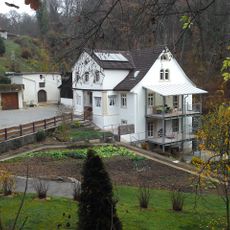
The name Weisswasserstelz likely comes from the white Jurassic limestone blocks used in the castle's construction. The castle controlled the Rhine narrows and the bridge at Kaiserstuhl together with Schwarzwasserstelz on the opposite island and Rotwasserstelz to the east. The nearby Wirtschaftshof, later a Zehntscheuer, has a keystone dated 1560.
The ruins are open year-round with no entrance fee, and informational signs explain the structure and its history. Plan your visit for clear days when the views of the river valley are most rewarding.
The castle's name likely comes from the white Jurassic limestone blocks used in its construction, as suggested by local historian H. Fuchs Sr. Across the Rhine, on a small island, stood Schwarzwasserstelz Castle; together with Rotwasserstelz a few kilometres east, the three castles controlled both riverside roads and the bridge at Kaiserstuhl.
The community of curious travelers
AroundUs brings together thousands of curated places, local tips, and hidden gems, enriched daily by 92,892 contributors worldwide.