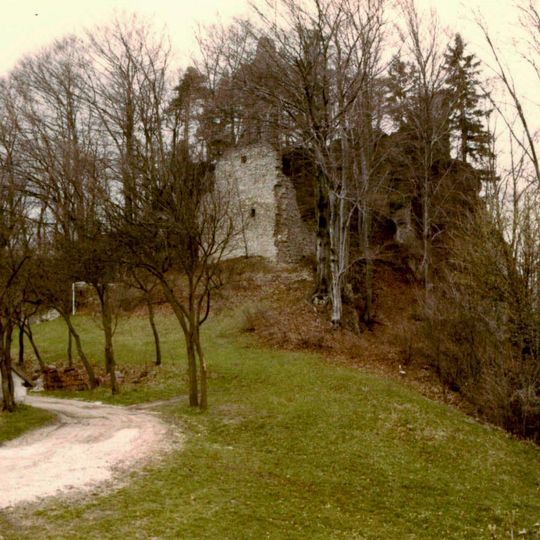
Wildenfels Castle, Medieval castle ruin in Simmelsdorf, Germany.
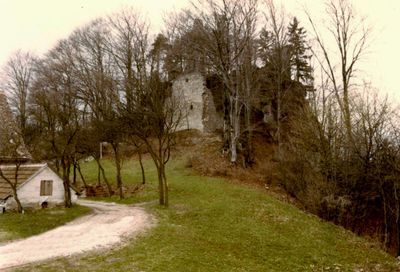
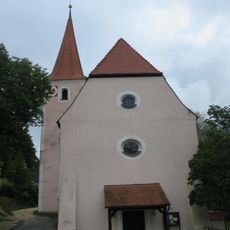
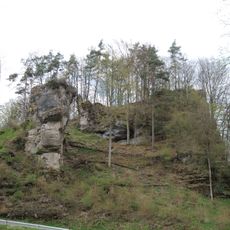
Wildenfels Castle is a ruined hilltop castle on a rocky 586 m summit in the Wildenfelser Wald, north of the village of Wildenfels. Surviving are limestone-block and rubble-stone remains of the palas, the bergfried and the surrounding walls, built between the 13th and 15th centuries. The visible wall has a broken top edge, a small rectangular window opening and a second opening below it, and no roof.
Built around 1290/1300 by the Lords of Wildenstein, the castle is first documented on 11 August 1323, when Dietrich III von Wildenstein called himself "Dietrich Wildensteiner von Wildenfels". In 1356 the free-owned castle was granted to Emperor Charles IV as a fief. In 1511 Nuremberg bought it for 1300 guilders and set up the Pflegamt Wildenfels in 1518. Destroyed in the Peasants' War of 1525, rebuilt, then destroyed again in 1553 in the Second Margrave War under Margrave Albrecht Alcibiades, it was never rebuilt.
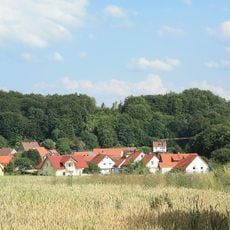
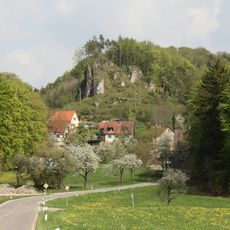
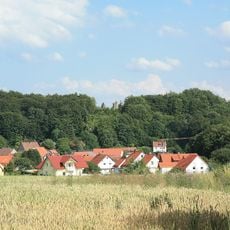
The castle gave its name to the village of Wildenfels below it. The Wildenstein family sealed documents with a mill-wheel coat of arms, and Dietrich III appears in 1323 as "Dietrich Wildensteiner von Wildenfels". The site is freely accessible and lies on the Fränkische Schweiz – Frankenjura nature park trail network.
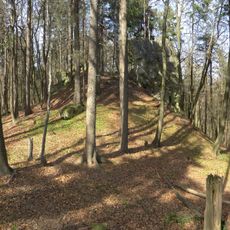
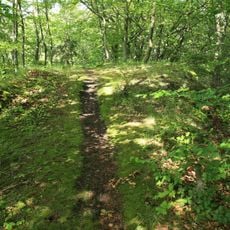
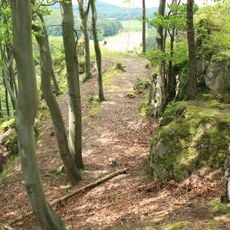
The site can be reached via marked hiking paths from Simmelsdorf village and parking is available in the village center. The ground is uneven, so sturdy footwear and reasonable fitness are helpful for exploring the ruins.
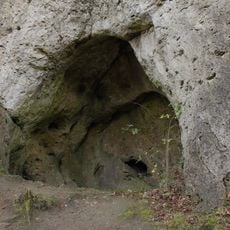
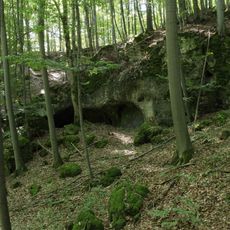
At the foot of the ruin lies a small cave, the Burghöhle in Wildenfels, recorded in the Franconian Alb cave register as D 180. The square bergfried lost its western half to lightning in 1827. The ruin is a listed monument, D-5-74-158-80, with limestone blocks from the 13th to 15th century.
The community of curious travelers
AroundUs brings together thousands of curated places, local tips, and hidden gems, enriched daily by 93,472 contributors worldwide.