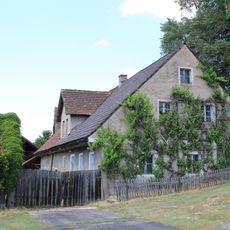
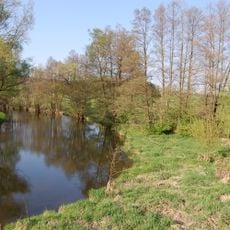
Burgruine Zangenstein, Castle ruin in Schwarzhofen, Bavaria, Germany
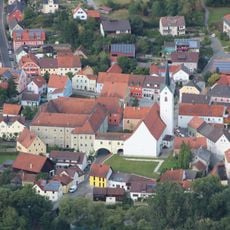
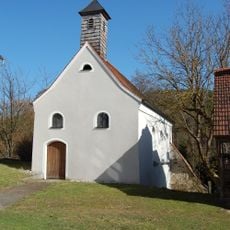
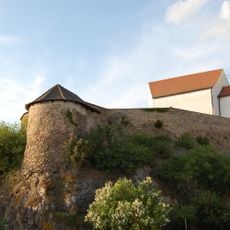
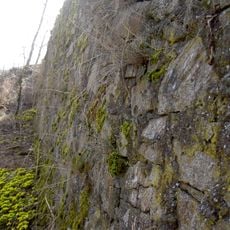
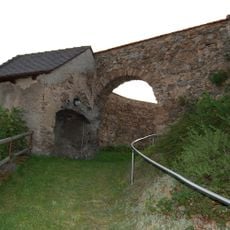
Burgruine Zangenstein is the ruin of a hilltop castle on a granite rock at 370 m above sea level above the Schwarzach in the Zangenstein district of Schwarzhofen, Upper Palatinate. Remains survive of the surrounding wall, the palas, the castle gate and a shell tower, and inside are several collapsed vaulted cellars with pointed-arch entrances beneath the palas. The castle had no bergfried. The baroque castle chapel rebuilt in 1686 by Johann Friedrich von Aufsess stands on the rock and is visible from afar.
Zangenstein Castle was built in 1360 by Otto der Zenger von Schwarzeneck with permission from Palatine Count Ruprecht I, on a granite rock above the Schwarzach at an existing bridge. A 1360 charter mentions stone fortification, suggesting an earlier wooden-palisade stronghold on the site. After the Zenger family died out in the 16th century, the castle passed to Dietrich von Winterfeld around 1600 and changed owners several times before falling into ruin in the 19th century.
The chapel from 1686 displays baroque features and sits among medieval wall remains on the grounds. Visitors can see how different periods layer together in the building styles here.
The ruin is in private ownership, so visits require prior arrangement with the owner. The chapel on the rock can be viewed after prior registration. The site lies on a granite rock above the Schwarzach near the Zangenstein hamlet of Schwarzhofen; the underground passage from the lowest cellar down to a farm building is part of the structure, not a visitor route.
A 2010 excavation beside the castle rock, encircled by the Schwarzach, uncovered a 2,800-year-old burial mound from the Hallstatt period. The finds were assessed by the Bavarian State Office for Monument Preservation in Regensburg and are now shown in the Nabburg town museum.
The community of curious travelers
AroundUs brings together thousands of curated places, local tips, and hidden gems, enriched daily by 94,644 contributors worldwide.