Burg Hewenegg, Medieval castle ruins in Immendingen, Germany.
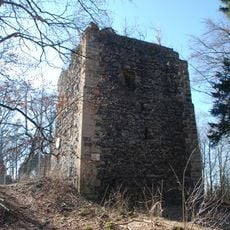
Burg Hewenegg is a vanished hilltop castle on the 812-metre basalt cone of the Höwenegg, about 2.8 km southeast of Immendingen's church. According to castle researcher Konrad Albert Koch, it had an oval to polygonal ground plan of 70 by 42 metres with an inner area of 1,700 square metres, divided by an inner wall. The gate lay to the southwest, a building stood on the west side, two more on the north, and a ditch ran along the north slope. Only possible wall and tower remains survive on the eastern edge of the summit.
The structure was first documented in 1291 as a possession of the Herren von Hewen family and passed to the Grafen von Lupfen-Stuhlingen in 1404. This transfer reflected shifting power dynamics among the regional nobility during the late medieval period.
The name appears in several forms: Hewenegg, Junghewen, Hauptburg and Höwenegg. In 1476 the site was already recorded as a Burgstall, a vanished castle, before passing through the Lords of Reischach to the Princes of Fürstenberg. The quarrying that removed most of the castle began in the 20th century.
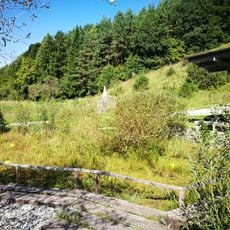
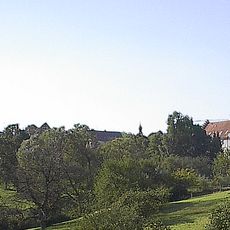
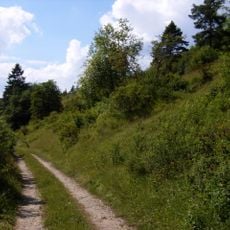
The ruins are located on an elevated basalt cone overlooking the surrounding landscape and can be reached on foot or by vehicle from Immendingen. The site is open to visitors and sturdy footwear is recommended since the terrain is natural and uneven.
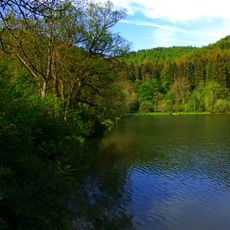
After the medieval period, the site was transformed into a quarry where stone extraction over decades created a deep pit that eventually filled with water. This unexpected lake now sits where the castle once stood, creating an unusual geological feature from industrial activity.
The community of curious travelers
AroundUs brings together thousands of curated places, local tips, and hidden gems, enriched daily by 93,778 contributors worldwide.