Hohenecken Castle, Medieval castle ruins in Hohenecken, Germany.
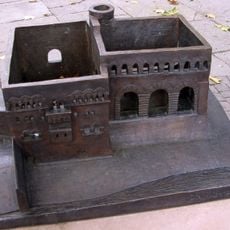
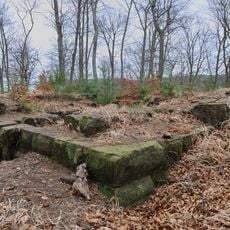
Hohenecken Castle is a medieval castle ruin perched on a ridge in the village of Hohenecken, on the western edge of Kaiserslautern. The site is divided into several sections, with a defensive wall, residential areas, and a pentagonal tower forming the main parts of the structure.
The castle's exact foundation date is unknown; older literature placed it right after Kaiserslautern's Barbarossaburg of 1156, but the pentagonal bergfried and massive shield wall point to construction around 1200. In the first half of the 13th century it was enfeoffed to the descendants of the knight Reinhard of Lautern, who took the name von Hohenecken. It was captured by rebellious peasants in 1525, taken by Prince-Elector Charles Louis of the Palatinate on 20 August 1668 after a week-long siege, and blown up by French troops in 1689.
The castle walls follow a style typical of the Staufer period, which visitors can see in the thick stonework that still stands today. The site is used by locals as a destination for short walks, and the remains are easy to explore on foot.
The site is open all year and free to enter, so no planning is needed for the visit itself. Parking is available close by at Burgherrenhalle on Forststrasse, which makes it easy to reach by car.
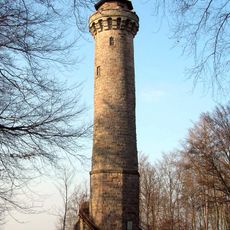
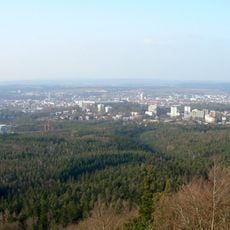
The pentagonal keep is a rare shape for a medieval tower, as most were built with round or square plans. On clear days, the elevated position of the ruin gives a wide view over the nearby quarries and wooded hills.
The community of curious travelers
AroundUs brings together thousands of curated places, local tips, and hidden gems, enriched daily by 93,381 contributors worldwide.