Burg Hohenfels, Medieval castle ruin in Hohenfels, Germany
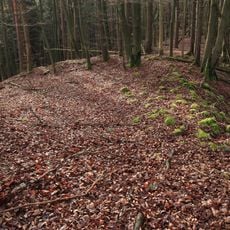
Burg Hohenfels is a medieval castle ruin located on a hilltop above the village of Hohenfels in Upper Palatinate. The remains display stonework from different construction phases, with structures showing an older core and later defensive additions.
Burg Hohenfels was probably built in the early 12th century by the Lords of Hohenfels, a branch of the Raitenbucher family who were ministeriales of the Bishop of Regensburg. On 28 December 1250 Konrad von Hohenfels tried to murder King Conrad IV on the bishop's orders; after the failed attempt the king had the castle destroyed, and it was rebuilt. In 1427 Palatine Wittelsbach administrators occupied it, and it was later destroyed by Bohemian Hussites. In the 19th century it was sold for demolition and used as a quarry.
The name Hohenfels, "high rock", matches the ridge at 428 m where the castle stands. The lords of Hohenfels, a branch of the Raitenbucher and ministeriales of the Bishop of Regensburg, held it as an allodial seat until the line died out in 1393. The round bergfried's entrance lies over 10 m up, reached by wooden stairs a defender could remove.
The site is accessible via a hiking path that leads upward from the road to the ruins. The trail offers good orientation points and provides views across the surrounding landscape.
The castle was sold for demolition in the 19th century and quarried for its stone, which is why only the round eastern bergfried survives as a building; its high entrance lies over 10 metres up the rock. The second, square bergfried, faced with bossed ashlar from the late 12th century, remains only as a stump.
The community of curious travelers
AroundUs brings together thousands of curated places, local tips, and hidden gems, enriched daily by 94,329 contributors worldwide.