Burg Mömbris, Medieval castle ruins in Mömbris, Germany
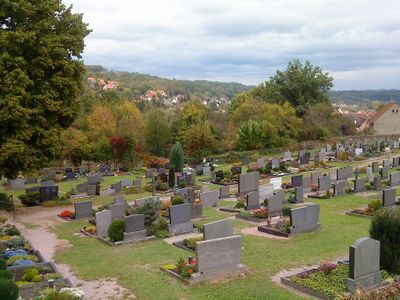
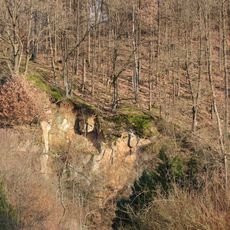
Burg Mömbris, also called Schloss Mömbris, is a vanished spur castle in the middle Kahlgrund, below the Old Cemetery in Mömbris. Only the castle mound remains: a nearly square plateau about 25 by 32 metres, with wall-and-ditch systems on three sides and terrace-like features on the slope toward the Kahl. The visible hill is a 19th-century fill.
The Counts of Rieneck are considered the builders of the castle, probably erected before 1300 alongside Hauenstein Castle to secure the upper Kahl and Lohr valleys. In 1405 Frankfurt and Gelnhausen soldiers destroyed Schloss Mömbris on the orders of King Ruprecht, led by Count Günther von Schwarzburg; the castle was later rebuilt, as a 1708 site plan shows, and finally fell into ruin by the end of the 18th century.
The name Mömbris derives from the castle and was transferred to the settlement, which originally lay west around the castle and shifted southeast after its destruction in the Middle Ages. The name is often wrongly linked to the Womburg, a castle near Schimborn; this error gave Strötzbach's Womburgstraße its name. Two theories explain the name: Middle High German Hemelris, "swamp clearing", or the personal name Hemilio with riz, "furrow".
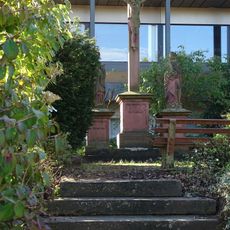
The castle plateau, about 25 by 32 metres, lies east of the Old Cemetery in Mömbris; remains of the moat were found during the cemetery extension in April 2012. The visible mound is a 19th-century fill, not the original castle hill. The site is an open Bodendenkmal with no facilities, so wear sturdy shoes.
Excavations in 2019 revealed three distinct settlement phases, including a wooden fortress from the 1250s before the stone structure was built. Later cemetery expansion work uncovered sections of the original moat.
The community of curious travelers
AroundUs brings together thousands of curated places, local tips, and hidden gems, enriched daily by 93,897 contributors worldwide.