Burgstall Engelsberg, Medieval castle ruins in Fürstenfeldbruck, Germany.
Burgstall Engelsberg is the site of a vanished high-medieval spur castle on a 560 m moraine spur directly south above Fürstenfeld monastery. The roughly 2,000 m² monument (60 × 45 m) keeps an irregular triangular castle mound, a neck ditch still three to four metres deep, and an earth bridge giving access to the oval core. Only terrain features and the ditch remain; several Nagelfluh banks jut from the northern slope.
The castle existed at least since the 12th century, guarding a side road of the Salzburg–Augsburg route that branched at Gilching and passed the site toward the old Amper bridge. It was last mentioned as a fortification in 1285 and afterwards demolished, probably by Fürstenfeld Abbey, founded in 1263, to prevent reuse. Around 1700 a shooting range stood on the plateau; in 1779 a pleasure garden was laid out there.
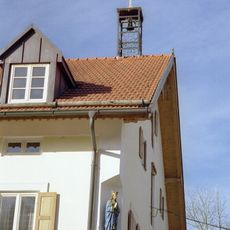
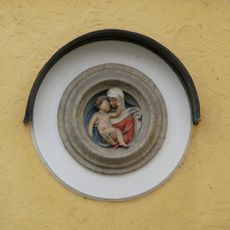
The name Engelsberg likely comes from twelve angel figures said to have surrounded the Madonna statue on the plateau. That statue, a Traubenmadonna, now stands in a barred wooden box on the rampart by the neck ditch. A shooting ground was laid out on the plateau around 1700, and in 1779 a pleasure garden was created there.
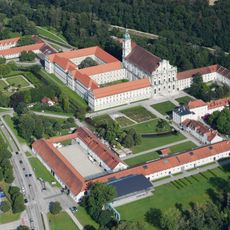
The site is easily accessible from nearby Fürstenfeld monastery and offers benches for resting while exploring the grounds. The paths are generally walkable, though sturdy footwear is advisable since the location sits on a hillside.
The Madonna now standing on the rampart of the outer bailey is a Traubenmadonna (grape Madonna) kept in a barred wooden case. It was originally set up on the plateau in 1779, when a pleasure garden was laid out there, and is said to have been surrounded by twelve angel figures, which probably gave the site its name Engelsberg.
The community of curious travelers
AroundUs brings together thousands of curated places, local tips, and hidden gems, enriched daily by 93,879 contributors worldwide.