Burgstall Wichsenstein, Medieval castle ruins in Gößweinstein, Germany
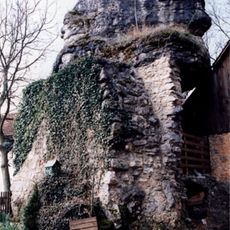
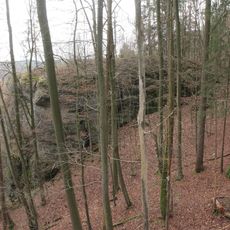
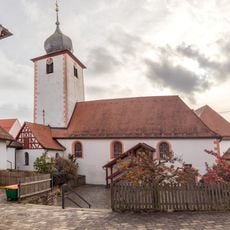
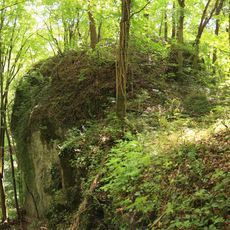
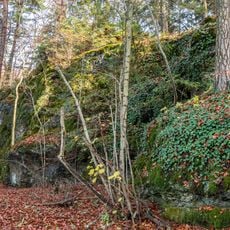
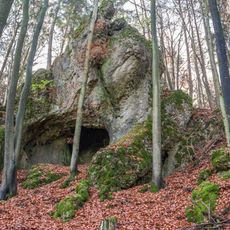
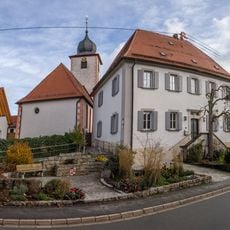
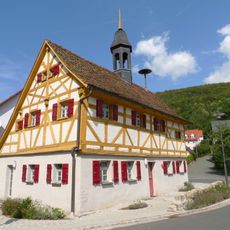
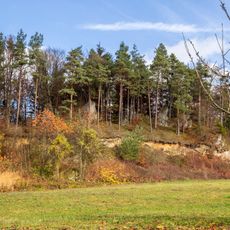
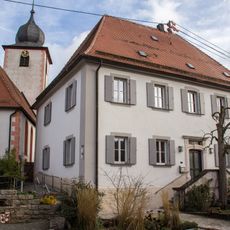
Burgstall Wichsenstein is a completely vanished hill castle on the Wichsensteiner Fels, a rocky knoll at about 587 m above sea level on the northern edge of Wichsenstein, roughly 20 m above the village and 60 m north-northwest of the parish church of Saint Erhard. No walls or foundations survive; the rock itself now serves as a viewpoint.
The castle was first documented on 30 October 1310, when Conrad I of Wichsenstein received 60 pounds of Haller from the Bishop of Bamberg and had to guard it for ten years. In 1421 it was destroyed by Bishop Albert of Wertheim for robber baronry, rebuilt by 1436, and probably finally ruined in the Peasants' War of 1525.
The ruins show how medieval people built their fortifications on natural rock outcrops to watch over the surrounding land. Such fortified settlements were typical in this region and shaped how people organized their control over the territory.
The rock is reached on foot from the village of Wichsenstein, about 20 metres above it and some 60 metres north-northwest of the parish church of Saint Erhard. There are no visible castle remains and no on-site facilities, so bring water and wear sturdy shoes for the rocky summit.
The castle rock, a protected natural monument at about 587 metres, is still used as a viewing point above the village, roughly 20 metres higher and some 60 metres north-northwest of the parish church of Saint Erhard. A 1609 document on the Wichsenstein riding estate still recorded large parts of the ruins standing.
The community of curious travelers
AroundUs brings together thousands of curated places, local tips, and hidden gems, enriched daily by 94,644 contributors worldwide.