Burg Dießenstein, Medieval castle ruins above Ilz River in Saldenburg, Germany.
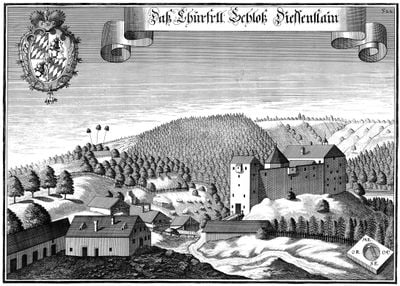
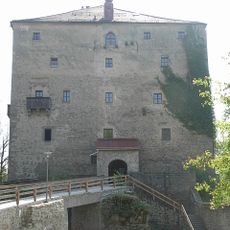
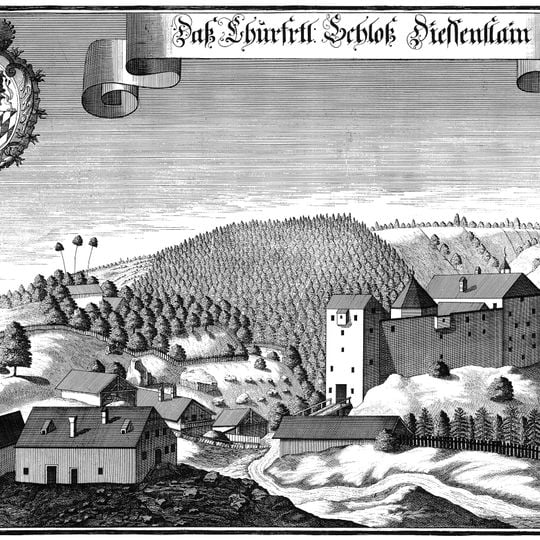
Burg Dießenstein is a castle ruin situated on a steep rocky hilltop above the Ilz River in Saldenburg, featuring remaining walls and a deep protective ditch encircling the site. The fortification uses the natural rock formation as its foundation and offers wide views down into the valley below.
The castle was probably founded in the 12th century by the Edlen von Hals, as a castle site (Burgstall) at Dießenstein is mentioned before the later construction. In 1347 Schweiker I. Tuschl was commissioned to build the fortress, and Schweiker II. Tuschl with four relatives erected the castle on Bavarian ground. In 1378 the indebted Tuschl family sold it to the Frauenberger, who soon passed it to the Bavarian dukes, who installed caretakers (Pfleger) and established the court of Diezzenstayn. In 1742 Pandur colonel Franz von der Trenck captured the castle after a siege, accidentally ignited hidden powder barrels, and in anger had the complex completely razed.
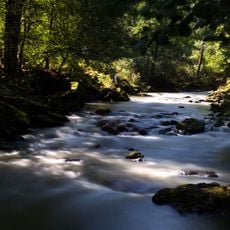
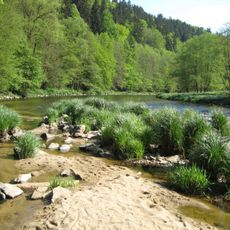
The castle's name comes from Middle High German 'diessen', meaning rushing water, a reference to the sound of the Ilz River flowing below the rocks. This connection to the landscape remains present today when visitors walk through the ruins and hear the water echoing from the valley.
The ruin is reached on foot via the marked hiking trails Ilztalrunde No. 83 and Ritter Tuschl auf den Fersen from Saldenburg to Dießenstein. The site is privately owned but freely open to visitors. The ground is uneven and the paths are steep in places.
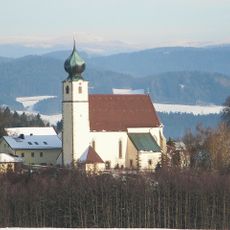
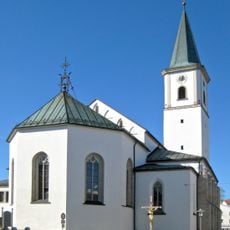
The original altar from the castle chapel survived the destruction in 1742 and now stands in the choir of Saint Brigida Church. This preserved piece connects the lost chapel to the religious life of the village.
The community of curious travelers
AroundUs brings together thousands of curated places, local tips, and hidden gems, enriched daily by 92,637 contributors worldwide.