Cramer-Klett-Park, Park in Nuremberg, Germany
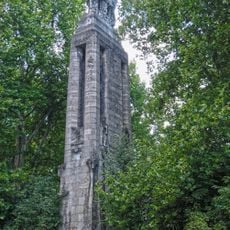
Cramer-Klett-Park is a 4-hectare public park in Nuremberg between Laufertorgraben, Äußerer Cramer-Klett-Straße, Keßlerstraße and Keßlerplatz. Its 1960s layout kept the existing trees, with seating terraces and pergolas, a fountain and plantings. The domed Apollo Temple with its portico stands as the surviving garden building.
The Cramer-Klett family laid out a garden around their villa in the 19th century on former orchards and vegetable plots near Wöhrd. The classicist Apollo Temple was built in 1823; its dome figure by Philipp Kittler followed in 1934. Nuremberg bought the estate in 1929 and opened the green space to the public in 1931. After wartime destruction, the park was redesigned in the 1960s, and the temple burned down in 2000, reopening three years later.
The park serves as a meeting place where neighbors gather to walk, sit, and enjoy time outdoors together. On warm days, you can see families and friends using the open spaces for picnics and casual conversations.
The park is freely accessible and visitors can enter from multiple points, with the western entrance being particularly convenient. All paths are level and easy to walk on, making it comfortable for leisurely strolls at any pace.
The Apollo Temple, a domed classical garden pavilion built in 1823, is the only structure to survive the wartime demolition of the villa grounds. Its dome figure by Philipp Kittler was added in 1934, and since 1963 it has housed Nuremberg's puppet theatre, rebuilt after a 2000 arson fire.
The community of curious travelers
AroundUs brings together thousands of curated places, local tips, and hidden gems, enriched daily by 93,784 contributors worldwide.